The Last Blast Furnace: A Day at U4 in Uckange
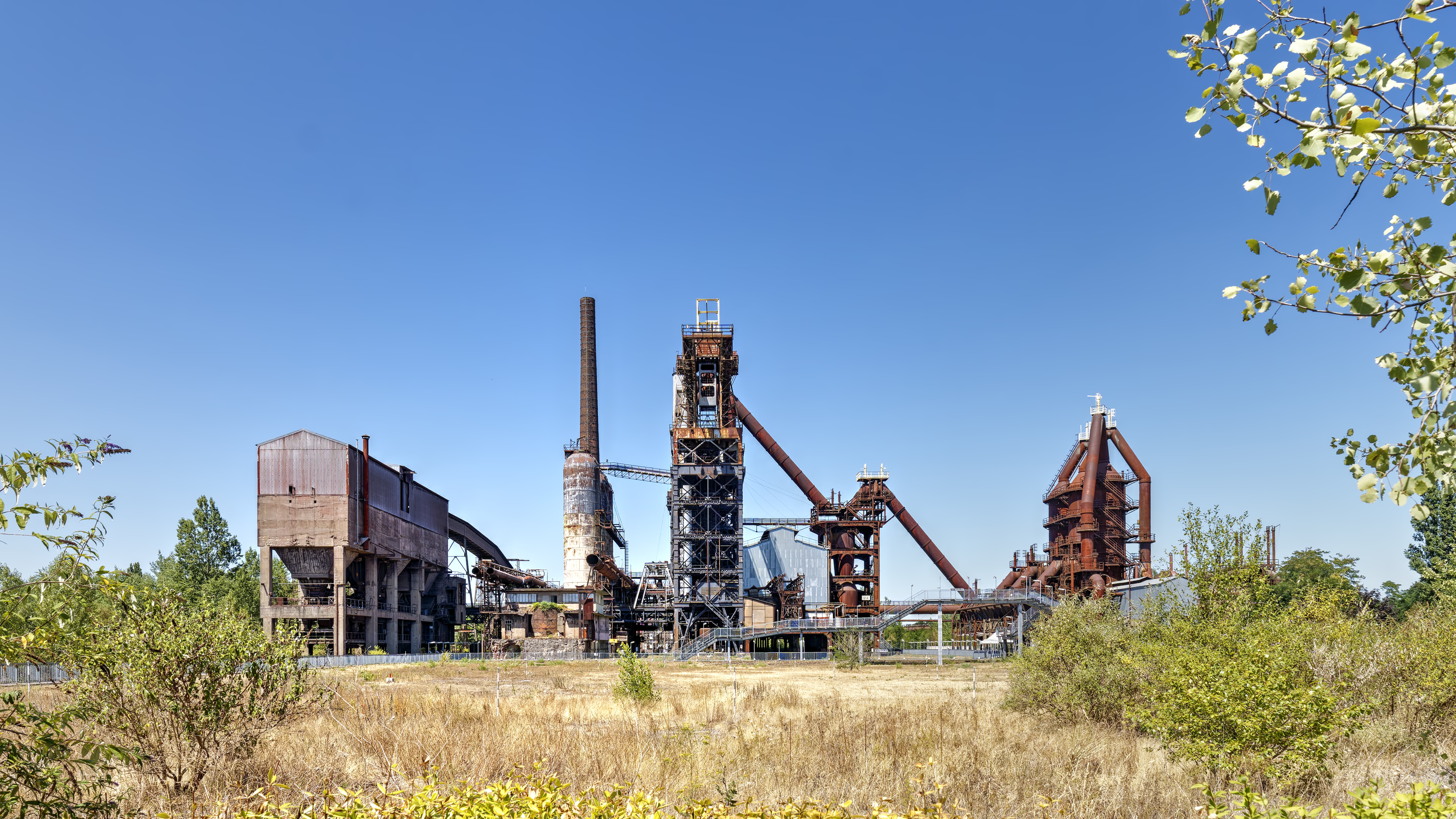
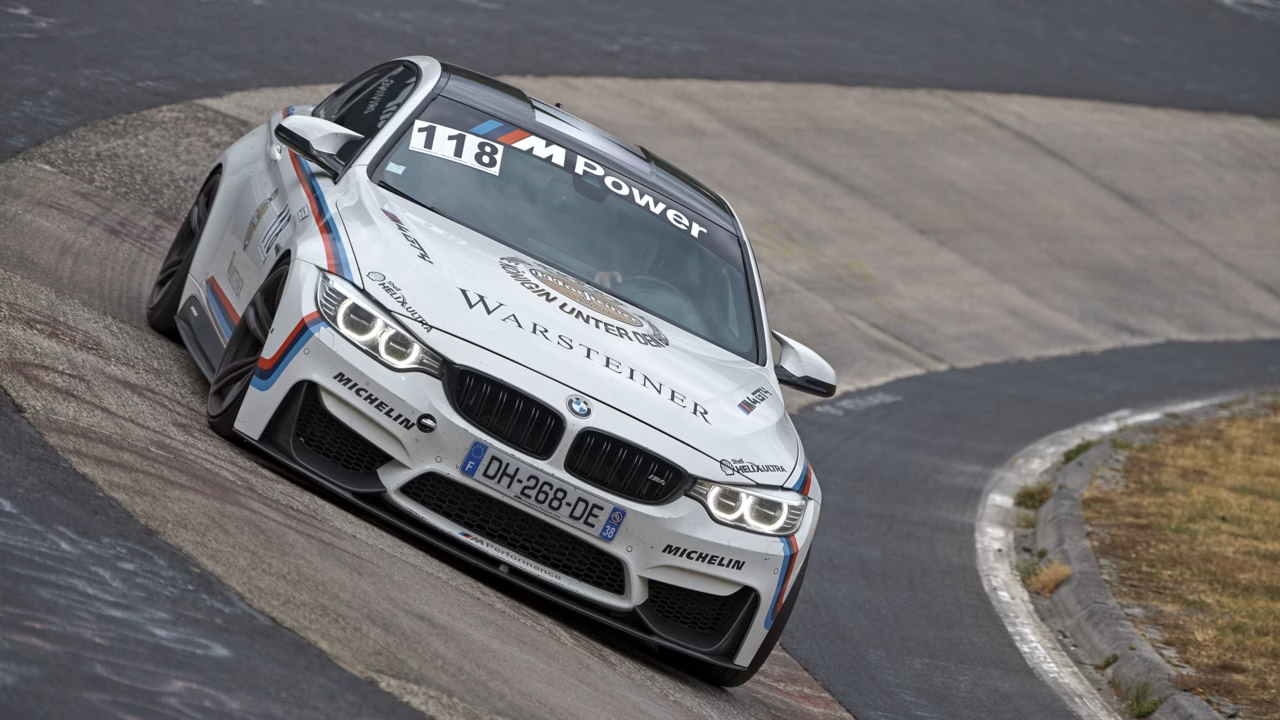
Some detours are worth the miles. After a few days spent burning rubber on the Nürburgring’s Nordschleife, I could have taken the highway home without lifting off. Instead I stopped in the Fensch valley, about twenty miles from the Luxembourg border, to get a close look at something that survives in only one example in France: a blast furnace still standing, still whole, still open to visitors.
So on July 28, 2026, I traded the corners of the Eifel for the steel walkways of the U4 blast furnace park in Uckange.
Six blast furnaces, one survivor
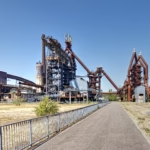
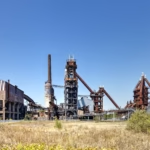
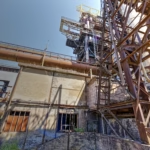
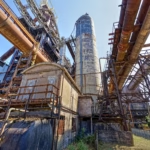
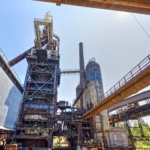
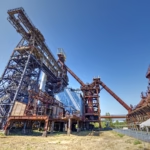
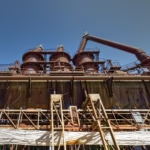
The Uckange ironworks was founded in 1890 by the Stumm brothers, Saarland industrialists who came to work the Lorraine iron ore after Germany annexed the Moselle. Four blast furnaces at first, then two more by 1913: six in all. U4, rebuilt in 1930 and 1931, is the only one that escaped the scrappers’ torches.
The numbers on the welcome panel are staggering once you set them against what French steelmaking has become. For sixty years, somewhere between 900 and 1,200 people worked here in round-the-clock shifts, producing as much as a million tons of pig iron a year for the region’s steelworks and foundries.
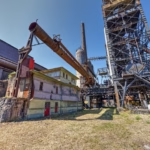
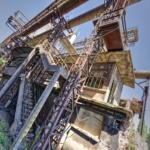
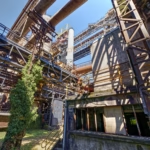
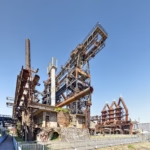
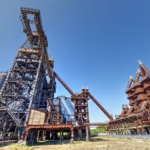
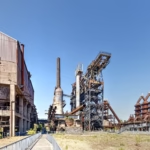
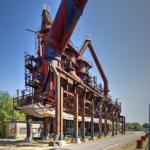
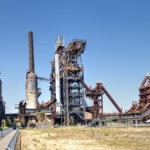
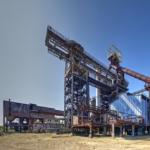
U4 was idled once in the 1970s, restarted in 1983 after modernization, then shut down for good by Usinor in December 1991. Of the seven blast furnaces still operating in France at that date, it is the only one that was not dismantled and destroyed. Its listing on the supplementary inventory of historic monuments, by prefectural order in January 2001, is what saved it. The Val de Fensch agglomeration authority bought the site in 2005, carried out the asbestos removal and safety work, and opened it to the public in October 2007. Thirty acres of former industrial wasteland, a chimney rising 270 feet, the furnace’s charging platform at 233.
What strikes you, if you know how this country usually treats its factories, is that this rescue was anything but an administrative given. It took an association of former workers, MECILOR, ten years of persistence to obtain something the state would never have initiated on its own. Compare that with the way we liquidate industrial flagships today: Brandt, a century of history erased with a stroke of the pen, or Duralex kept alive on a drip of storytelling until the money ran out. Here, at least, somebody fought to keep the record.
The exhibit, or memory from below
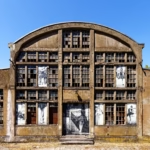
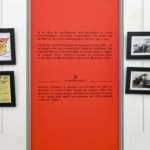
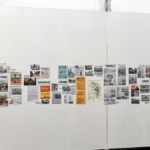
Before you climb onto the walkways, you pass through the exhibition space run by MECILOR, whose volunteers are largely former steelworkers from the valley. That changes everything. This is not a museum designed by a Paris exhibition-design firm; it is a memory held by the people who lived it.
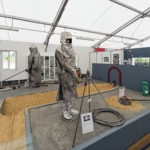
A reconstructed casting runner, complete with mannequins in aluminized suits, tells you most of what you need to know about the job: iron at 2,500 degrees Fahrenheit running through sand, men in metallized leather standing a few feet away, a tapping bar and a shovel for precision tooling.
An entire wall is devoted to the ending. Restructurings, globalization, the closing of the mines, the plants going dark one by one. The shutdown of Uckange was announced in the summer of 1991; the unions and the local population mobilized, with demonstrations reaching as far as Paris. The last cast of iron was tapped on December 17, 1991.
One detail I had not known, and that made me smile: Bernard Lavilliers played a concert inside the plant in October 1991 in support of the workers. He had already dedicated a song to the valley fifteen years earlier, “Fensch Vallée.” You may find the man dated, but he has to be credited with singing about these people when nobody else would. The INA archives preserve the record of that losing battle.
The Staehler bucket and the eye for detail
What held my attention most was the technical side. From a distance, a blast furnace is a mass. Up close, it is a piece of watchmaking that happens to weigh several thousand tons.
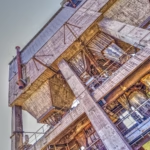
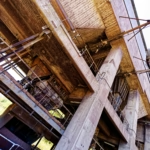
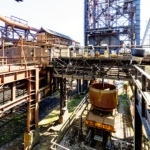
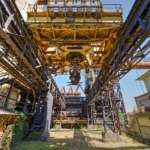
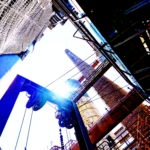
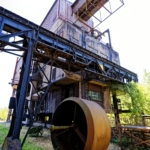
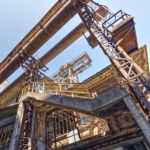
U4 was charged using a bucket known as the “Staehler,” after its builder. Thirteen cubic meters of capacity, which meant seven tons of coke or twenty-four tons of ore depending on what you poured into it. The bucket was positioned under a storage silo to be filled, then traveled horizontally before climbing to the furnace top. That combination of horizontal and vertical movement is what makes U4 unusual, and it is also what gives the structure its unmistakable silhouette.
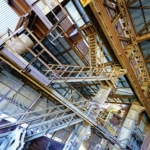
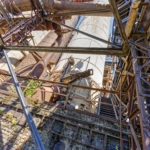
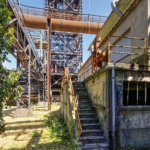
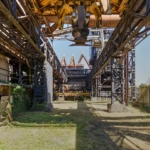
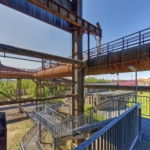
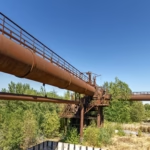
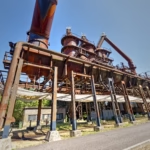
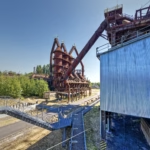
The visitor route follows the path of the raw material, from the storage silos through to the gas cleaning plant, by way of the hot blast stoves, the charging tower, the furnace itself, and the cast house. This is process logic, not tourist logic, and you feel it: you understand the plant because you walk it in the direction it once worked.
The cast house
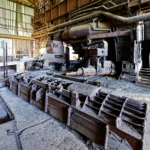
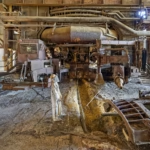
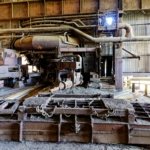
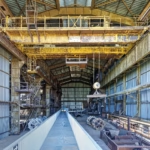
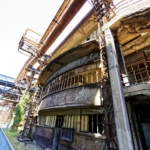
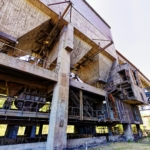
Open to visitors since 2016, the cast house is the high point of the tour. This is where the iron came out of the hearth, through a taphole opened with a drilling machine and plugged again with a mud gun after every cast.
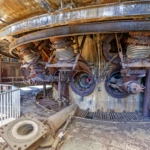
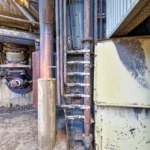
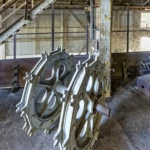
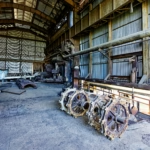
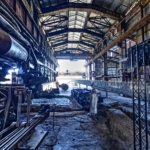
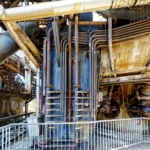
Everything is still in place. The hot blast mains circling the furnace, the drilling machine on its arm, the sand-filled runners, the plates of solidified iron on the floor. Dust has fixed the scene exactly as it stood on the evening of December 17, 1991. A mannequin of a furnace keeper stands at the edge of the runner, helmet on, face shield down. The staging could easily have tipped into kitsch; it never does, because the sheer scale of the place flattens any theatrical effect.
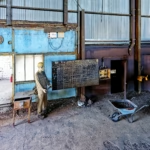
Then there is the board. A blackboard hung on the wall of a service room, “HF No. 4, day of 04/01/16,” with its columns ruled in chalk: cast number, time, temperature, additions, quality. A wheelbarrow of slag beside it. A stopped clock on the blue wall.
That board is worth every speech ever given about industry. A million tons a year was managed in chalk, cast by cast, by crews who could read the temperature in the color of a stream of molten iron.
Tous les soleils
The site has a second life after dark. In 2007, as part of Luxembourg and the Greater Region’s turn as European Capital of Culture, the artist Claude Lévêque completed a public commission here titled “Tous les soleils”, or “All the Suns”: a permanent lighting installation, glowing red across the furnace and the charging tower, gold along the upper walkways, giving the illusion of a plant back in full blast. It is visible for four miles around.
I could not stay for nightfall, so that will have to wait for another trip. On principle, I am of two minds. Turning a factory into a work of contemporary art is also an elegant way of conceding that it will never produce anything again. But if that is the price of keeping the public money flowing and U4 upright, so be it. The craftsmen who rebuilt Notre-Dame and the volunteers who maintain U4 are engaged in the same work: you can only preserve properly what you still know how to make.
What we are really looking at
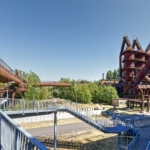
Walking back down to the parking lot, through the plantings of the Jardin des Traces laid out over the old sinter plant, one thought stayed with me.
We had gone to the Nürburgring to drive a circuit built in 1927 by a Germany in crisis looking for ways to put its unemployed to work. A circuit where manufacturers still come today to set the benchmark lap time, Chinese ones included. We ended the trip standing in front of a French plant that went cold in 1991 and is preserved as a historic monument precisely because it is the last one. The difference between the two is not a matter of aesthetics: Germany kept its industry and made the racetrack an accessory, while we lost ours and turned the factory into the show.
And the story keeps running in the same direction. Steelmaking Lorraine was sacrificed on the altar of a globalization that promised happy specialization. Thirty years on, we are discovering that Beijing holds our value chains by the rare earths, that our automotive industry is dying of its own protections, and that while China builds machines, France sells shares. Uckange is not a closed episode. It is the opening chapter.
A country that puts its blast furnaces behind glass and its expertise onto trilingual signage has already answered the question of its industrial sovereignty. The U4 tour is fascinating. It is also, if you are willing to look at it squarely, a very well lit death certificate.
None of which takes anything away from the MECILOR volunteers, who keep this place alive with rare precision. If you are passing through northern Moselle, go. And take the guided tour: the guides worked here, and what they have to say is written on no panel.
Practical information
Parc du haut-fourneau U4, 1 rue du Jardin des Traces, 57270 Uckange, France. Open from April through early November. Self-guided, audio-guided, and guided tours depending on the day, with the MECILOR exhibition included; current schedules are on the official site. Nighttime tours of “Tous les soleils” run on Saturday evenings in summer, by reservation only. Wear closed shoes and bring a layer: it blows across those walkways, even in late July.
Gallery
All photographs taken on site on July 28, 2026.