Culture Japanese has a word for the light that filters through leaves, English borrows terroir for lack of anything better, and French had to wait for the Franks and the Arabs before it could name the color blue. These words are not travel trivia: each one is a distinction that generations judged worth keeping, and a language’s vocabulary is the archive of what its speakers took the trouble to notice. Because words do not only describe what we see, they teach us what to look at. Which is what makes the simplification of school texts so strange: replacing a rare word with a vague one does not lighten a sentence, it takes from a child a distinction he may now never make.
Culture 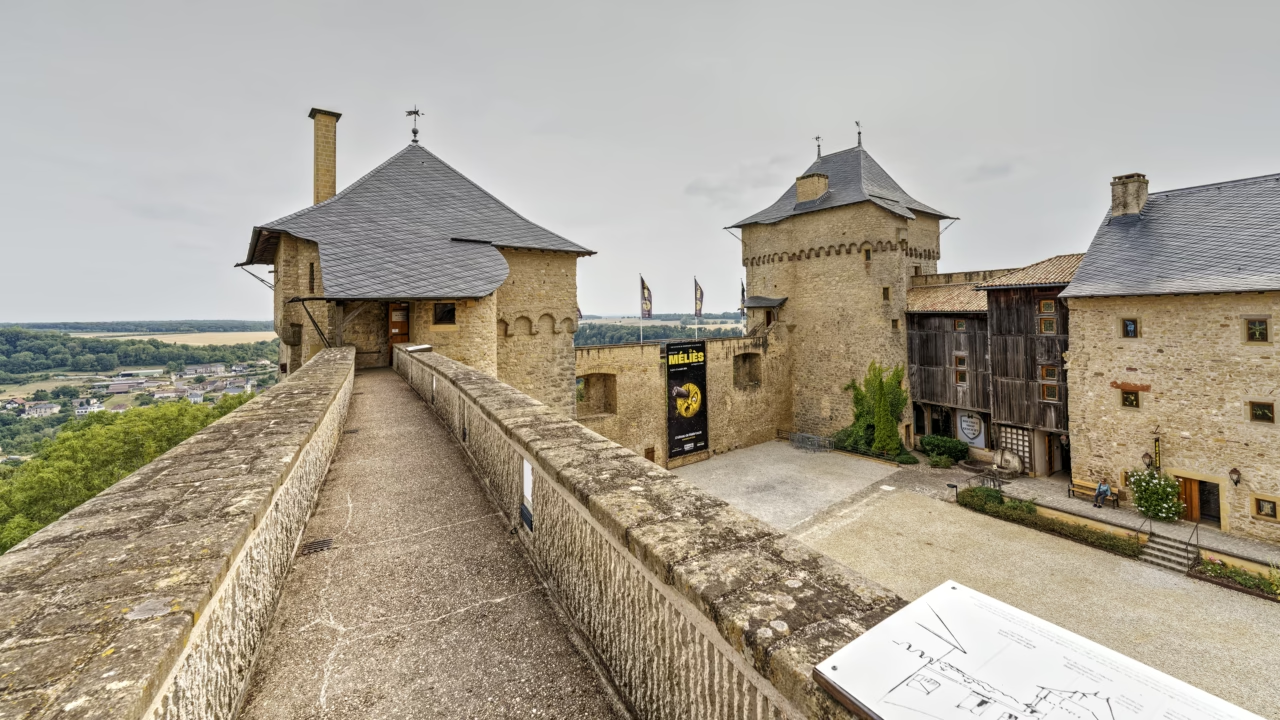
On July 31, 2026, as an extension of a trip through Lorraine, I drove up to Manderen-Ritzing to visit the Château de Malbrouck, a fifteenth-century fortress planted on its rocky spur in the heart of the Three Borders country. I came for the stone, the wall-walks, and the oak framing, with no idea that the castle was hosting an exhibition devoted to Georges Méliès this season, mounted with the Cinémathèque française. A fine surprise for anyone with a long-standing interest in the pioneer of the trick shot: magic lanterns, phenakistiscope discs, hand-cranked cameras, and the plans of the Montreuil glass studio tell the story of a moving image built first from mechanics and stubborn tinkering. A visit recounted, a reflection on what Méliès still has to say about illusion in the age of generated images, and a good place to eat a short walk from the site.
My life 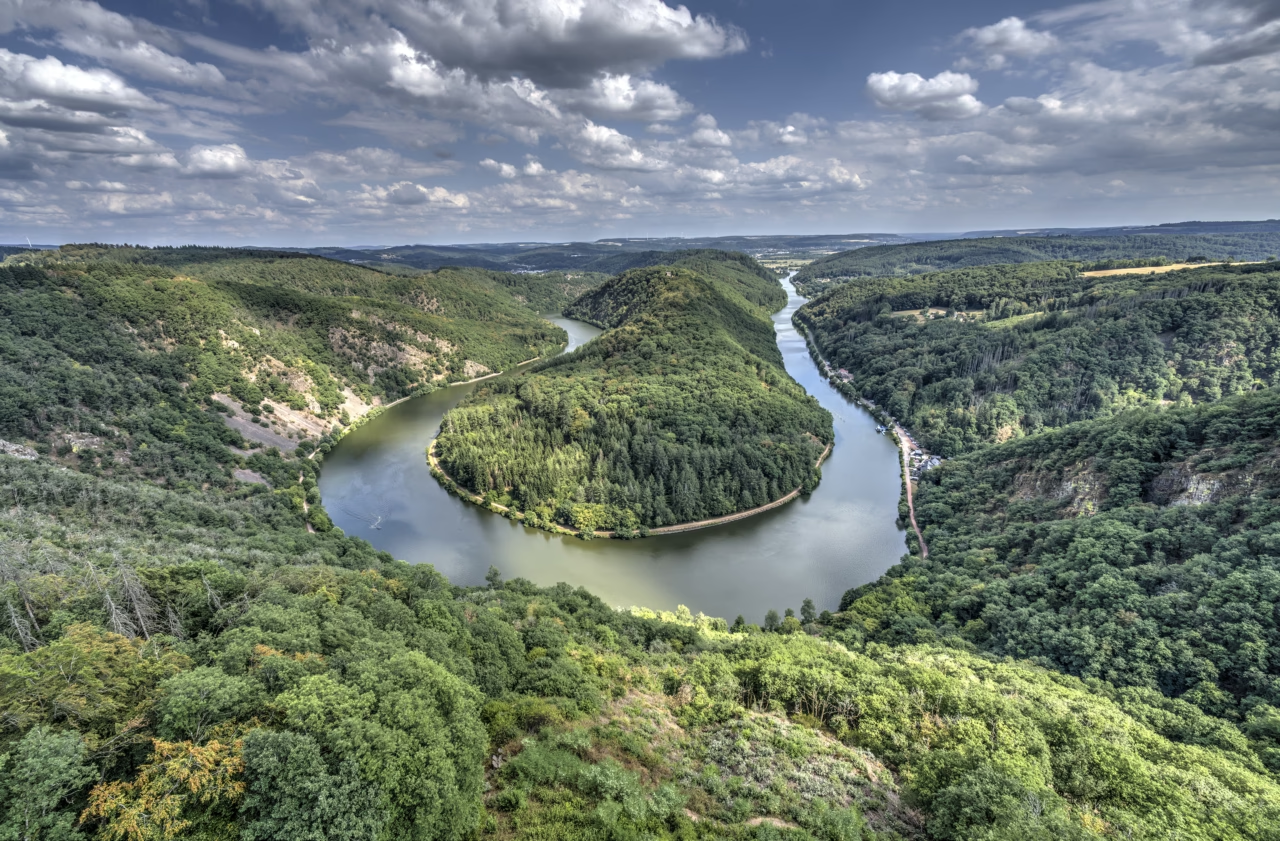
After the U4 blast furnace at Uckange, one hour of driving to the northeast takes you from industrial wasteland to forest canopy. At Orscholz, the Saarschleife treetop walk unrolls 1,250 meters of timber walkway through beech, oak, and Douglas fir, up to a 42-meter tower overlooking the most spectacular river bend in Germany. Not a single step from the parking lot to the top, a maximum grade of 6 percent, and a privately run structure maintained without a euro from local taxpayers. A visit, a note on the photography, Siegfried Line remnants a few hundred meters away, and everything you need to plan your own trip.
History 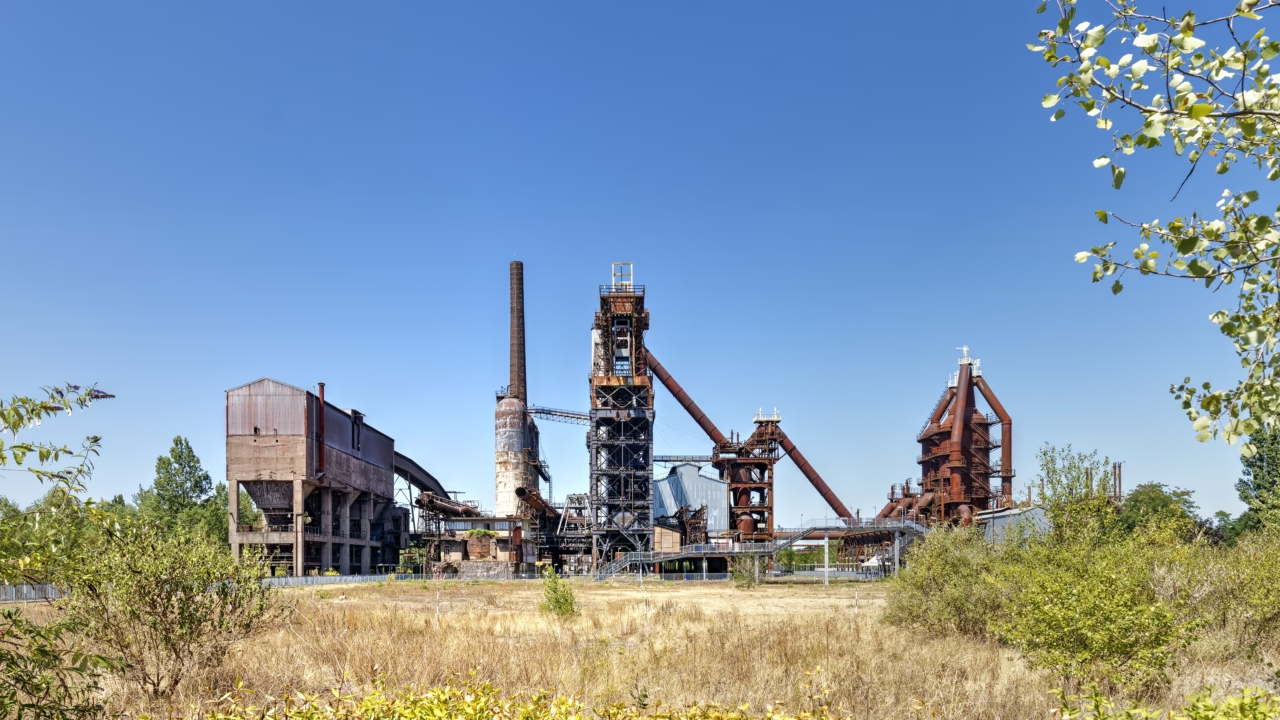
On the way back from a few days on the Nürburgring’s Nordschleife, I stopped in the Fensch valley to visit the U4 blast furnace at Uckange, the sole survivor of six installations at an ironworks that went cold in December 1991, and the only blast furnace in France open to visitors. Thirty acres of industrial wasteland, a 270-foot chimney, a cast house frozen exactly as it stood on the evening of the last tap: the place owes its survival to former workers who fought for ten years to get it listed as a historic monument. Between the Staehler bucket, the production board ruled in chalk, and the union posters from 1991, you grasp what 1,200 people working around the clock actually produced. But a country that puts its blast furnaces behind glass has already answered the question of its industrial sovereignty, and the tour, fascinating as it is, looks a great deal like a very well lit death certificate.
Philosophy When a carmaker discovers a defective part, it issues a recall notice. France has never done so for its intellectual products. Yet Foucault, Derrida, and Deleuze supplied the mechanisms that American campuses assembled into an identitarian war machine, with no manual and no safeguards, while their authors looked on, flattered. Forty years later the product is coming back to us by the containerload, and indictments are no longer enough. Here is the recall notice, and the warranty work starts now.
Culture For weeks I believed I had coined a word the language was missing: “simplexity,” that quality of things that look simple yet conceal a perfectly tamed complexity underneath. One quick check, and the whole thing collapsed: the word already exists, signed Alain Berthoz (Collège de France, Académie des sciences), complete with a book, an English translation, and a conference. Worse, Berthoz didn’t coin it either. But this is where the story gets delicious: going after a simple word and landing on a complexity that’s already mapped is precisely what simplexity describes. I set out to name the thing, and the thing ended up naming me.
Culture The Alloncle report came out this morning; at 8:56 a.m., Sébastien Lecornu was already posting a reaction tweet on X. Nearly four hundred pages digested in two hours by a prime minister: the feat is such that it’s worth examining the mechanics of it. The tweet isn’t a reaction, it’s a prefabricated rebuttal, calibrated from the past weeks’ leaks to occupy the media space before anyone has opened the PDF. A sentence-by-sentence breakdown of a little masterpiece of political communication drained of all substance, in which we find the three tics of late-stage Macronism: the flight into vision, the outsourcing to independent authorities, the neutralization by co-optation. Spoiler: we already know how it ends.
Culture The Strait of Hormuz may be six thousand kilometers away, yet for two months it has been dictating the price of fuel at the pump and promises to weigh for a long time still on food prices and plane tickets: France, which imports 29% of its diesel from the Middle East, is the willing hostage of a dependence it has refused to reduce for fifty years. Macron sent the Charles de Gaulle there, a sovereign posture that poorly masks a short-term survival policy. But reducing this conflict to a question of barrels would be a convenient way of not looking at what lies behind it: Hormuz is the economic symptom, Beirut is the heart of the war, and the 2,454 Lebanese dead in six weeks aren’t a geopolitical abstraction. Manon Debs, Vernis Rouge, a French-Lebanese artist evacuated from Lebanon in 2006, has just released a song because she’s afraid for her own and because writing is the only way she knows to feel useful. Two Frances facing the same conflict: one watches the price of a liter, the other waits for news of a street it knows by heart.