The Saarschleife treetop walk: the forest seen from 42 meters
Some sequences you couldn’t plan if you tried. A few hours earlier I had been walking twelve hectares of industrial wasteland and a casting hall frozen in place since 1991, on my visit to the U4 blast furnace in Uckange. One short hour of driving to the northeast, and there I was, strolling twenty meters above a canopy of beech. Same trip, same industrial valley in the background, two diametrically opposed ways of gaining altitude.
The Saarschleife treetop walk sits in Orscholz, part of the municipality of Mettlach, a few kilometers from the French border. You cross the Moselle, then the Saar, and the landscape shifts without warning: the slag heaps give way to the wooded hills of the Saar-Hunsrück nature park.
A river that doubles back
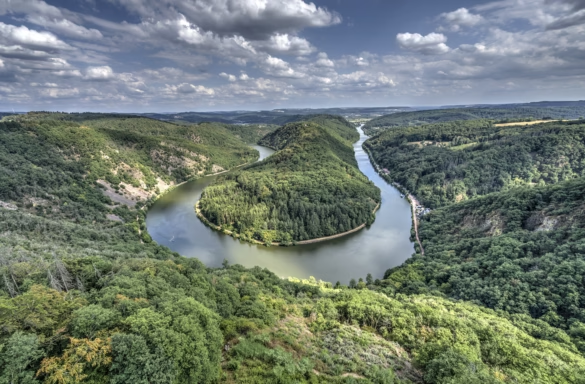
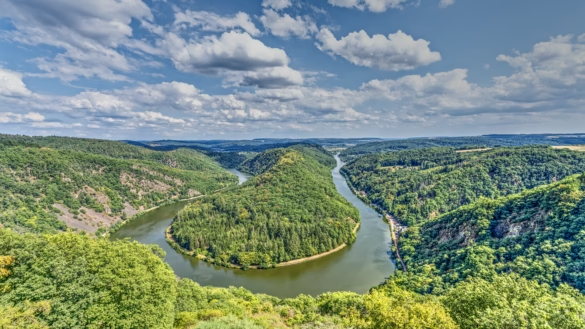
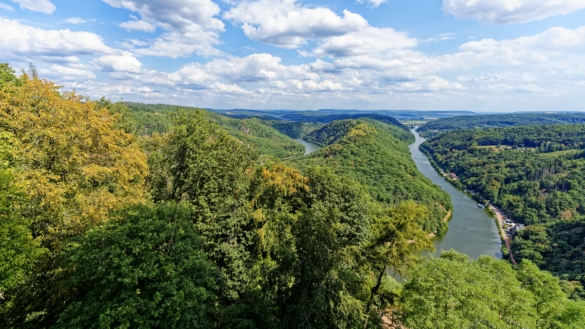
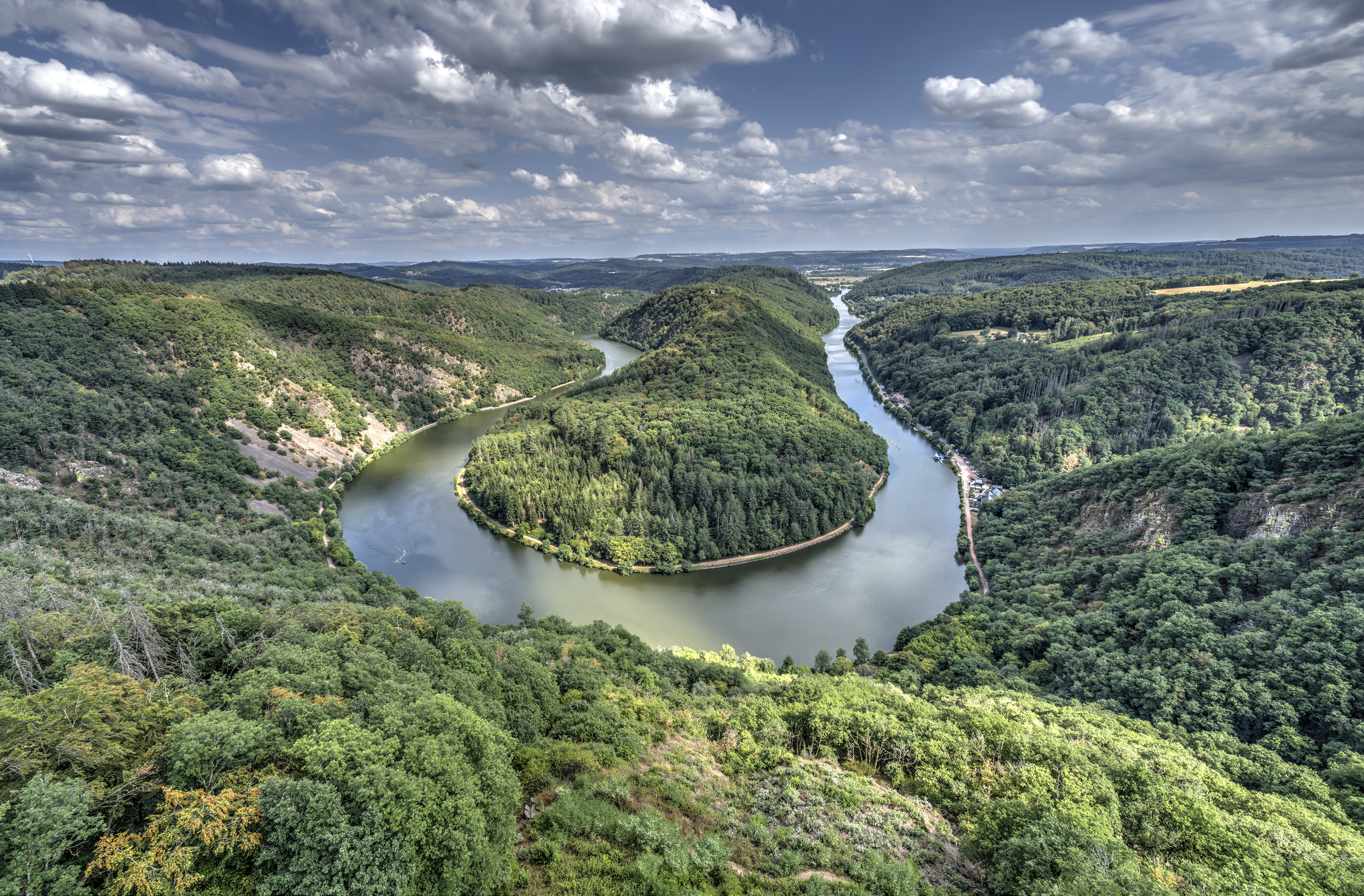
The Saarschleife, the great bend of the Saar, is a textbook geological quirk. The river slips into a deeply incised meander, runs some ten kilometers, and comes back to within two kilometers of where it started. Seen from above, it is a perfect horseshoe, ringed by forest on both banks, without a single power line or housing development to spoil the frame. The people of the Saarland have made it their emblem, and for once the tourist superlative is earned.
The historic overlook, the Cloef, stands 180 meters above the water. It is free, five minutes on foot from the parking lot, and it delivers the classic postcard shot. The treetop walk offers something else: not the panorama, but the journey to reach it.
Twelve hundred and fifty meters of walkway
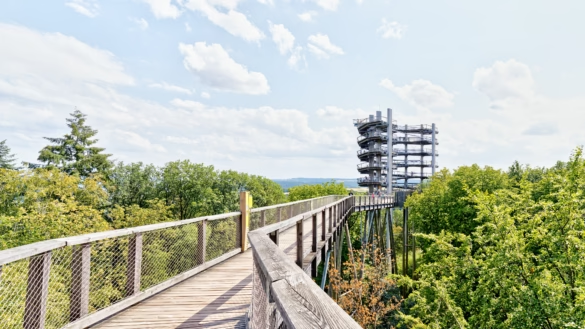
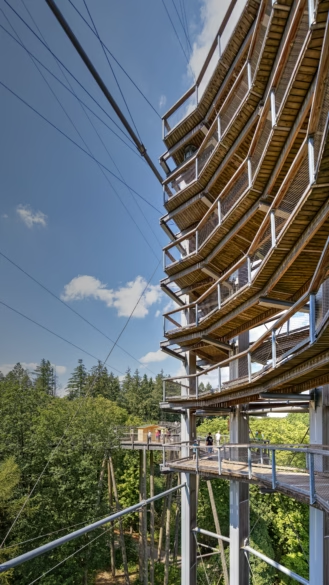
The walkway winds 1,250 meters through beech, oak, and Douglas fir, climbing steadily from three meters off the ground to twenty-three. The idea is simple and remarkably effective: instead of crossing the forest along the floor, you cross it through the middle, level with the main limbs, where nobody ever goes.
That shift in vantage point changes everything. From the ground, a stand of mature timber is a vertical wall of trunks. From twenty meters up, it becomes a volume, with stories, gaps, lichens you would otherwise never lay eyes on, and that filtered light which makes forest-floor photographs so hard to pull off. Interpretive stations punctuate the route, decent without being riveting, and discreet enough that the walk never turns into a classroom.
One detail matters more than the rest, and here I will be unreservedly complimentary: the maximum grade is 6 percent, and there is not a single step from the parking lot to the top platform. Wheelchair, stroller, tired knees, everybody goes up. Somebody built a structure more than two kilometers round trip while treating “nobody gets left out” as a design constraint from the outset, and the result is neither ugly nor makeshift. I know enough French sites where “accessibility compliance” amounts to a bolted-on ramp and an apologetic sign to appreciate the difference.
The tower, and what you see inside it
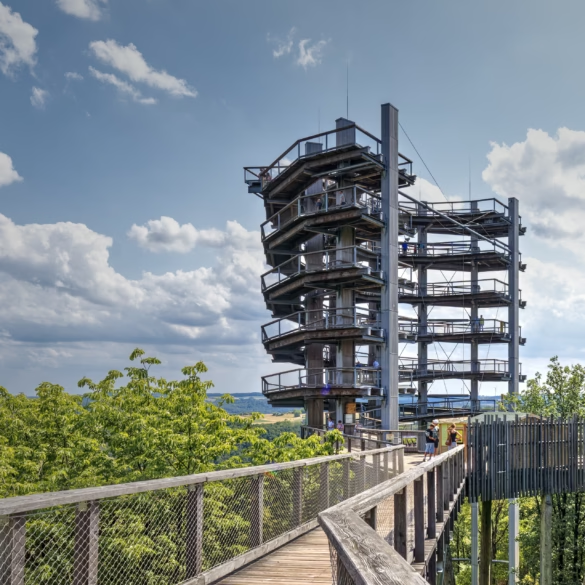
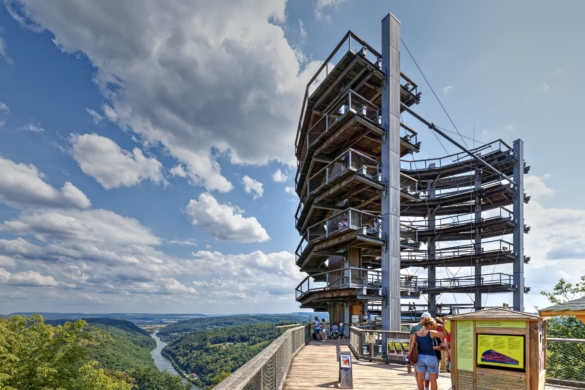
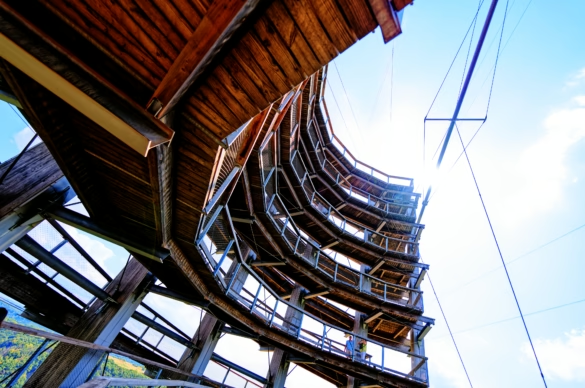
The path ends at a 42-meter timber tower, which you climb by way of a helical ramp coiled around an open core. Again, no stairs. The ascent is slow, deliberately so, and it produces a curious effect: you lose sight of the forest by degrees, the canopy drops away, the horizon rises, and the bend of the Saar appears all at once in the final third.
On a clear day the view carries past the hills of the Hunsrück, and I am told you can pick out the Vosges. On the day of my visit, the summer haze decided otherwise. No matter: the bend is enough.
I have a long history with overlooks, from the Belvédère des Trois Châteaux above Pont-en-Royans to the Combe-Laval panorama, and I have to grant the Saarschleife one quality the Vercors cannot offer: legibility. Back home, the relief crushes, cuts, conceals. Here, the whole thing fits in a single frame.
A note on the photography
A word for those who care about such things. This is a treacherous place to shoot. At midday, a forest seen from above is a nightmare of contrast: blown highlights across the canopy, blocked shadows two meters below, and sky intruding into nearly every composition. The real subject, in any case, is not the view from the tower, which everyone brings home and which looks much the same from one visitor to the next, but the structure itself: the lines of the walkway, the rhythm of the posts, the spiral seen from underneath, timber set against living trunks.
I usually make the case for 35mm and the discipline of a tighter frame, but I made an exception here: every photograph in this article was taken with the Sony 14mm f/1.8 GM, one focal length from the parking lot to the tower. The ultra-wide is the right tool in this setting, because the walkway is a corridor you cannot step out of, and because the tower only gives itself up whole from below, in its converging lines. It exacts a discipline in return: tilt the camera the least bit and the verticals collapse, and since the lens takes no front filter, there is no polarizer to cut the haze or the sheen on the leaves. The real cost shows up on the bend itself, which shrinks toward the back of the frame and has to be given a foreground. So for the Saar, come back late in the day: raking light finally sculpts the meander instead of flattening it. The rest was settled in post, following my usual workflow.
What you pay, and what that says
Admission runs €13 for an adult, €11 for a child aged 4 to 14, and €31 for a family ticket, on top of parking, which ranges from €1.50 for two hours to €6 for the day. The site is run by a private German operator, Erlebnis Akademie AG, which has rolled out the same concept at roughly a dozen locations across Europe.
You can read this as putting a tollgate on nature, and the objection is fair enough: the forest was free before somebody built a walkway over it. You can also note what I noted, namely a well-maintained structure, staff on hand, a ticketing system that works, and a site open year-round, rain and snow included. All of it without local taxpayers being drafted to fund some elected official’s pet project. I have written enough about “green” schemes financed by the community that nobody ever asked for to salute, here, a model in which the person who goes up is the person who pays.
One reservation remains. The adjoining adventure forest, its 7,000 square meters and twenty-five play stations, pulls the whole operation toward family theme park. That is entirely legitimate, and it is probably what pays for the rest, but if you have come looking for silence, come early.
Nearby, a less cheerful memory
A few hundred meters away, in the woods above Orscholz, the dragon’s teeth of the Siegfried Line still stand, the rows of concrete blocks belonging to the Orscholz Switch, which sealed the corridor between the Saar and the Moselle. They sleep under the moss, barely signposted, and you walk right past them if you are not looking.
The contrast with the walkway is striking. A hundred meters apart, the same woods hold a machine for contemplation and a machine for stopping tanks. I felt the same thing in Normandy standing in front of the Longues-sur-Mer battery: military concrete does not decay, it waits. Coming on the heels of the U4, that made for a great deal of industrial and military history read in whatever the region left standing.
Practical information
- Address: Cloef-Atrium, 66693 Mettlach-Orscholz, Germany. Roughly an hour’s drive from Thionville, in French Lorraine.
- 2026 rates: adults €13, reduced €12, children aged 4 to 14 €11, family ticket €31. Combined ticket with the adventure forest from €19. Full pricing on the official website.
- Hours: they vary by month, with a 9:30 a.m. opening in season. Last admission, and the last chance to buy a ticket at the booth, is one hour before the walkway closes. The monthly calendar is published on the visitor information page.
- Parking: paid lots P1 and P2 immediately adjacent, from €1.50 for two hours to €6 for the day.
- Accessibility: the walkway and the tower are fully passable by wheelchair and stroller, with a maximum grade of 6 percent and no steps anywhere.
- Dogs: not allowed on the walkway, service animals excepted.
- Weather: the walkway stays open in rain and in snow, but closes for thunderstorms and high winds. Check the operator’s website the morning of your visit.
- Worth combining: the Cloef overlook, free and five minutes away, the abbey and the Villeroy & Boch works at Mettlach, and the waymarked hiking loops of the Saar-Hunsrück nature park.
Gallery