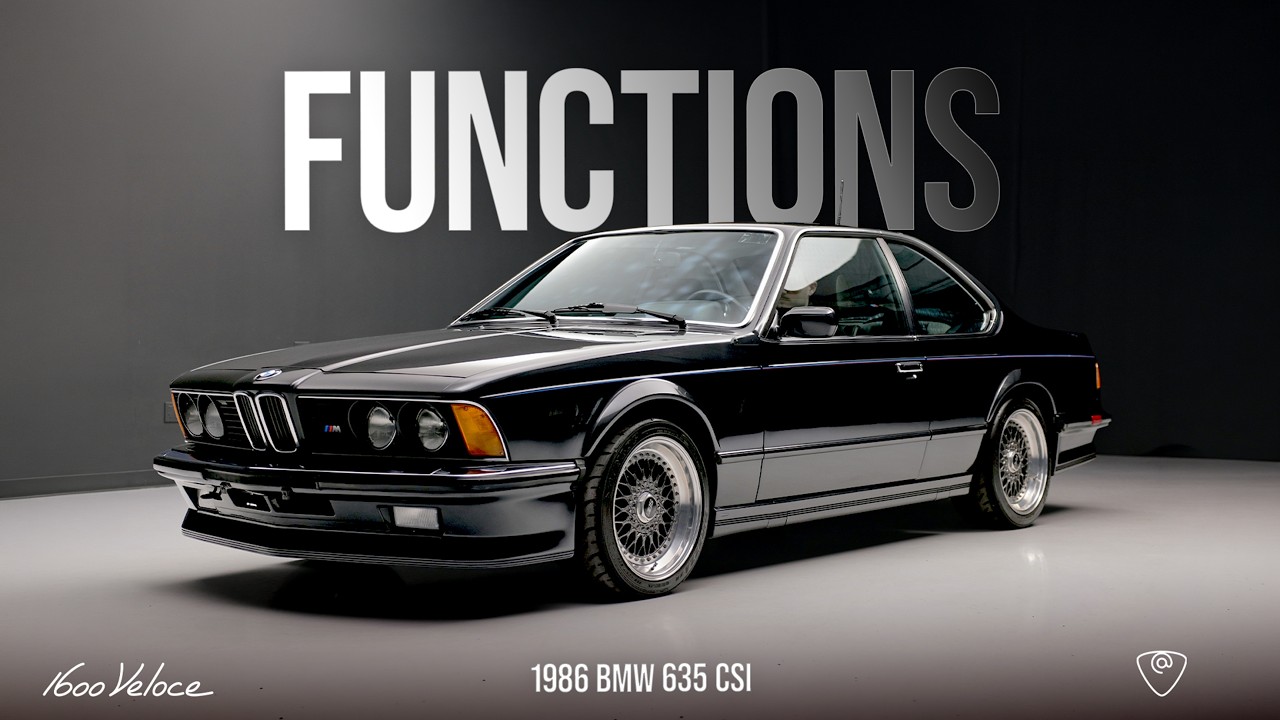
The M635CSi E24, or the Most BMW of All BMWs
There are questions you ask yourself once, and others that keep coming back like an old song you hum without noticing. This one belongs to the second kind. Over the decades, through my passion and the various ventures I look after, from blogbmw.fr to motorsport-passion.com to the BMW M Club France, I’ve had the good fortune to test, drive, and occasionally own an unreasonable number of BMWs. Very often M cars, of course. What can I say, old habits die hard.
And yet, every time I ask myself which car embodies the authentic BMW, the purest one, the one that breathes the brand through every panel and every weld, the answer lands with the same certainty: the M635CSi E24.
Let me say up front that objectivity has little place here. This post is not a comparison, much less a ranking. It’s a declaration. And like any declaration, it is partial, unapologetic, and a little nostalgic.
A shark nose slicing through the air
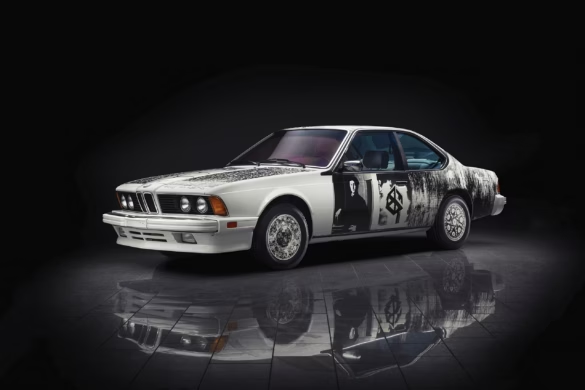
It all starts with a look. Or rather, with a snout.
The shark nose is the signature of BMW’s golden age. That forward-raked front end, as if the car were already leaning into the road before the engine has even turned over, tells you everything about the manufacturer’s intent. On the E24, it reaches what is probably its most pronounced expression in the entire Bavarian catalog. The grille dives, the twin kidneys stretch wide, the round headlights nestle beneath a hood that seems to want to bite the horizon.
There is something in that stance that would be impossible today. Pedestrian protection standards, aerodynamics dictated by the wind tunnel, and cooling requirements have filed this design away in the drawer of memories. Which is precisely why it still moves people so deeply. You cannot look an M635CSi in the face without feeling a slight vertigo.
The Hofmeister kink, a comma that became a signature
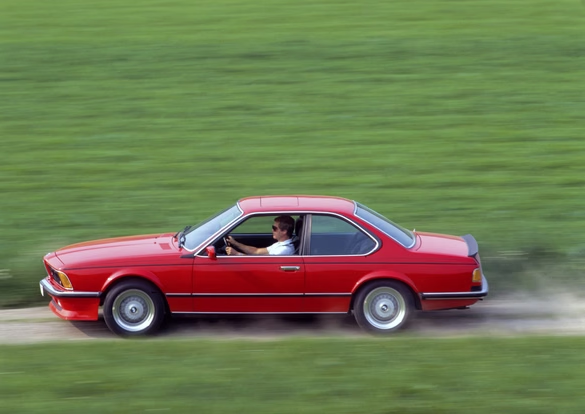
Walk around the car and linger on the rear quarter window. That little forward bend at the base of the C-pillar bears the name of Wilhelm Hofmeister, BMW’s former head of design. A detail, some will say. A grammar, those who love the brand will reply.
The Hofmeister kink gives the cabin a tension, a forward thrust that echoes the diving nose. The whole car looks ready to pounce, even sitting still in a parking lot. Modern BMWs insist on keeping it alive, thankfully, sometimes more as a symbol than as structure. But on the E24, it isn’t a callback. It sits in its natural place, at the heart of a silhouette whose every line it balances.
A cockpit with eyes only for you
Open the door. Settle in.
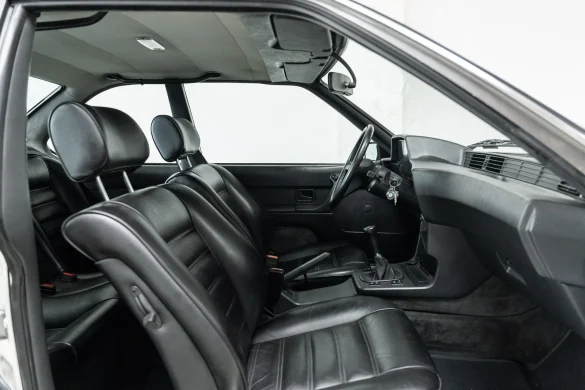
The dashboard is angled toward the driver. The center console turns slightly your way, the controls fall to hand, the instruments can be read at a glance. The passenger is welcome, of course, but quickly understands they are a guest. The master of the house is whoever holds the wheel.
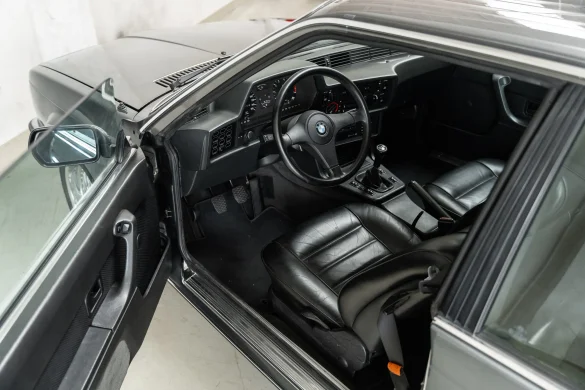
This design philosophy, which did so much to shape the brand’s identity, has gradually softened over the generations in favor of more symmetrical, more consensual interiors, more screens than dials. Inside the E24, the cabin is still about driving.
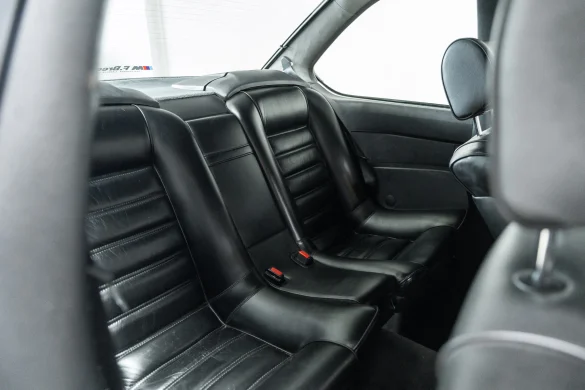
And then there’s the leather. Buffalo leather, thick, almost raw, with a matte finish that has none of the plasticky sheen of some contemporary interiors. A leather that develops a patina rather than wearing out, that withstands the years and the miles with the dignity of an old aviator’s jacket. The touch alone is enough to take you back to the mid-1980s, when luxury was measured by the thickness of the material rather than the diagonal of a touchscreen, a world away from the stinking plastic of today’s cabins.
The inline-six, the real one
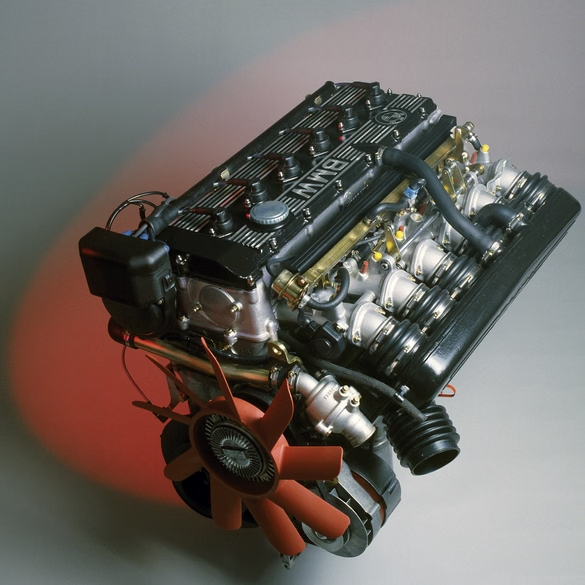
Then comes what makes the beast’s heart beat, and mine along with it.
This is also the moment to be honest. The nose, the kink, the cockpit, and the lines are shared by every E24, from the 628CSi to the 635CSi. So my real love letter goes to the E24 6 Series as a whole. But if the E24 is the most BMW of all BMWs, the M635CSi is its ultimate expression, for one simple reason: it received the heart of the M1.
Beneath the long hood breathes the M88/3, a direct descendant of the M1’s engine. A 3.5-liter inline-six, 24 valves, twin overhead cams, individual throttle bodies, 286 horsepower. Its catalyzed cousin, the S38B35, would go on to power the M6 destined chiefly for the American market. THE inline-six that forged the BMW legend, the one you can recognize by ear with your eyes closed: a hoarse growl at idle, then a metallic howl that climbs, and climbs again, and seems never to want to stop.
I knew that sound long before I knew what a camshaft was. In the early ’90s, a kid in the back seat of my parents’ M5 E34, I discovered the snarl of its S38, a direct heir to the M635CSi’s engine. There was the smell of leather mixed with Gitanes, the vacation road down to La Grande-Motte, and the flamenco of Manitas de Plata pouring out of the speakers. I understood nothing about mechanics. I only knew this car was like no other. That is probably where this whole reflection began, in the back seat.
You don’t merely use an engine like this. You hold a conversation with it. It’s paired with the Getrag 280/5 manual gearbox, whose lever demands a firm, precise hand, and power reaches the rear wheels through a mechanical limited-slip differential. No electronics to correct your approximations, none of the sanitization that has crept into modern cars, no drive mode to pick from a menu. Just a right pedal, a thin-rimmed wheel, and full responsibility for whatever happens next.
That, too, is what it means to be a BMW. A machine that trusts its driver, and expects him to rise to the occasion.
Paul Bracq, or French elegance in the service of Munich
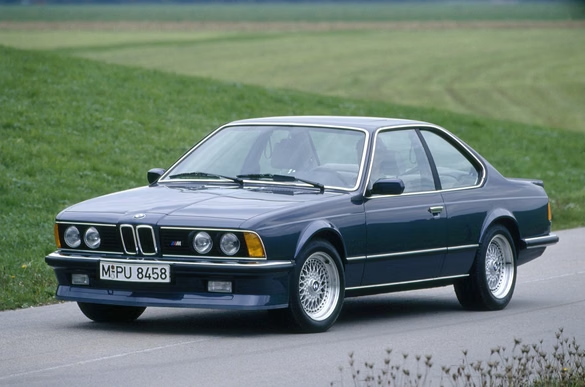
This last point ties back to the first two, but it deserves a pause of its own. Because these lines, this nose, this kink, this permanent tension between restraint and power, we owe them to a Frenchman: Paul Bracq.
The great designer, who passed through Mercedes-Benz among others before joining BMW, penned here one of the most beautiful silhouettes in automotive history. A long, low coupe with taut, uncluttered surfaces, where every line seems to have been drawn in a single stroke. No frills, no theatrics. An endless hood, a slim roofline, tightly controlled overhangs, a beltline that runs straight from the grille to the taillights.
There is in the E24’s design that discreet, almost aristocratic French elegance, placed in the service of Bavarian rigor. The marriage could have been awkward. It produced a masterpiece. Fifty years after its unveiling, this design has lost none of its rightness.
The dilemma of a dress
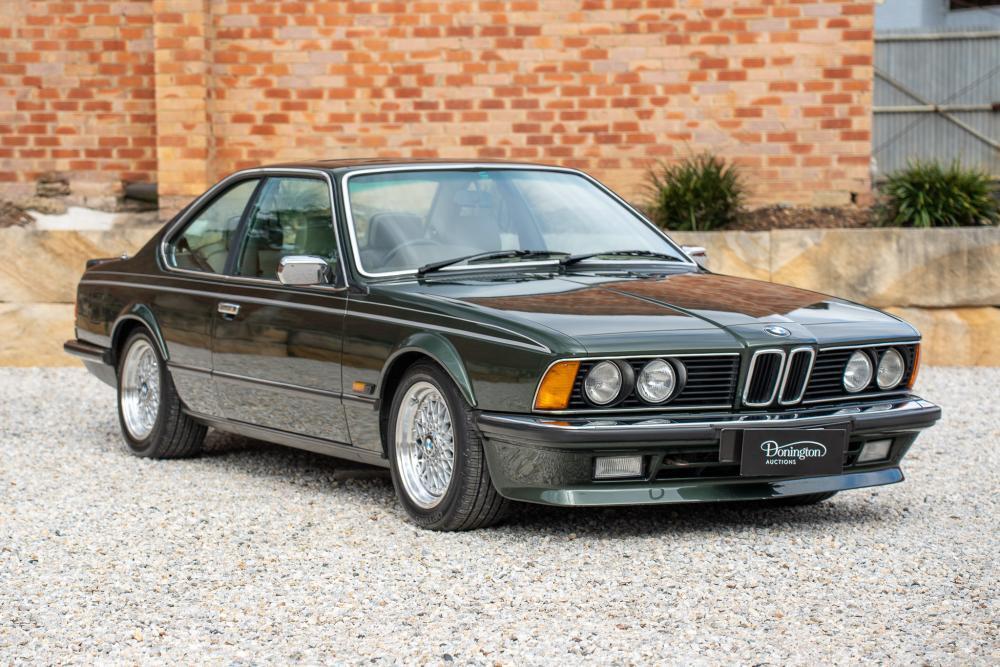
One question remains, and it is far harder than all the others: which color?
On one side, Malachitgrün, a dark, deep, almost forest green that underscores every edge of the bodywork with a thoroughly British gravity. A shade that speaks of leather, of wood, of country roads at dawn and old family houses.
On the other, Schwarz 032, a black of extreme depth, the kind you feel you could plunge your hand into. A black that turns the car into a shadow, that makes the chrome of the bumpers and the glow of the headlights leap out, that gives the shark nose a frankly menacing air under the streetlights of a sleeping city.
Either way, I want the interior dressed in extended Buffalo leather, in Natur or Cognac, so that the warmth of the hide answers the depth of the paint.
And since objectivity left the room a long time ago, I’ll admit I would probably treat myself to a few well-chosen personal touches. A Frankfurt RCM 82 DAB head unit, to keep the period faceplate without giving up today’s radio. A German exhaust, so the inline-six sings just a little louder. And four BBS RS wheels, because some pairings are less a matter of taste than of plain obviousness.
My heart wavers. It probably always will. And deep down, that may be the best proof of what I’ve been arguing from the start: when you spend years hesitating over a car’s color, it has already won.
The most BMW of all BMWs
I don’t claim to convince anyone. Others will swear by the 2002 Turbo, by the M3 E30, by the E9 CSL, or by the M1 itself, and they will have their reasons. But for me, the answer doesn’t change. The diving nose, the leaping kink, the cockpit that looks back at you, the howling inline-six, and the pencil stroke of a French genius: the E24 brings together the best of everything BMW ever designed, and the M635CSi adds the heart of the M1. None of these elements belongs to it alone. It is their combination, and that alone, that makes it the most BMW of all BMWs.
The M635CSi E24 is not the fastest BMW, nor the most capable, nor the most rational. It is simply the most BMW. And that is infinitely more precious.
At least, that’s what I swear today. Because every enthusiast knows the old truth that no argument has ever disproved: the best BMW is always the next one. The one you haven’t driven yet, the one waiting somewhere at the bottom of a classified ad or in the back of a garage, and which may, one day, make me rewrite this post.