Digital euro On June 23, 2026, by forty-three votes to fourteen with one abstention, the European Parliament’s Committee on Economic and Monetary Affairs adopted its position on the digital euro. Its chair, French MEP Aurore Lalucq, hailed a “historic day” for the Union’s monetary sovereignty. The plenary vote will follow in early July, then comes the trilogue, […]
Democracy 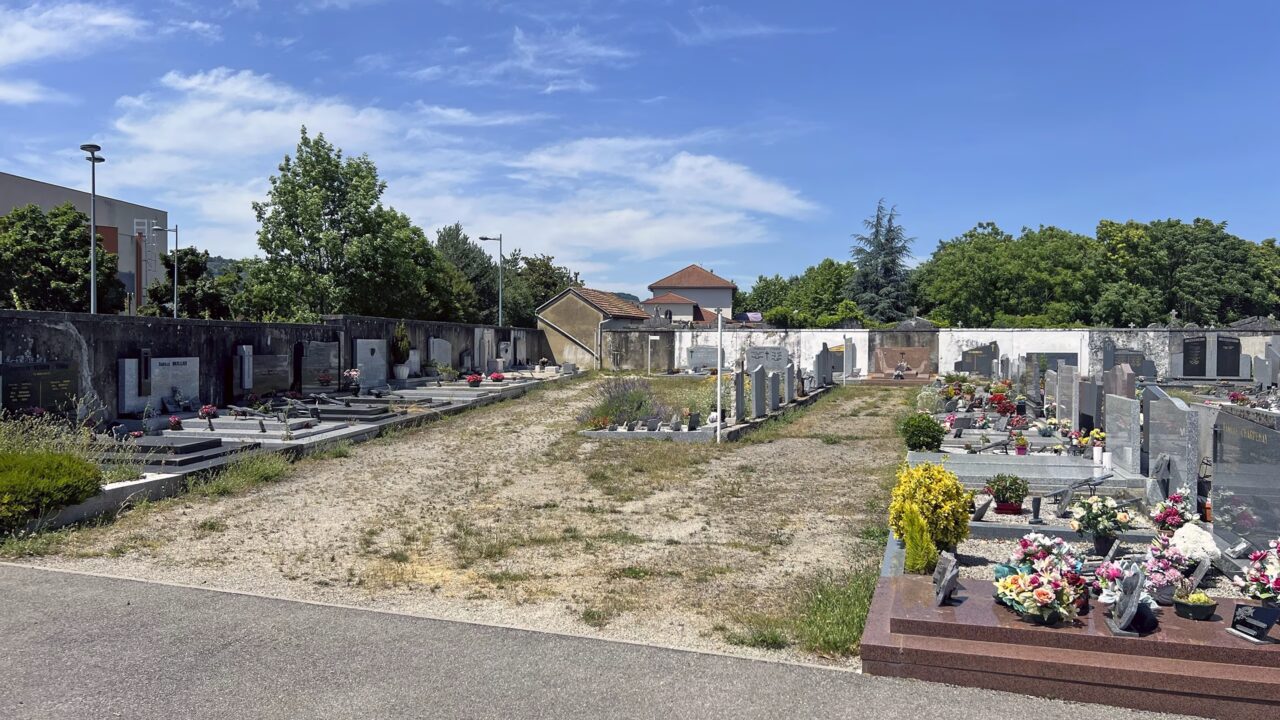
This spring, a handsome poster made the rounds in Saint-Marcellin. It celebrated the municipal cemetery as a heritage site worth visiting, complete with a guided tour and a poetic theme devoted to the passions of the departed, all under the banner of the Printemps des cimetières, France’s national weekend of funerary-heritage discovery. The intention is […]
Economy Michelin isn’t a company that’s dying: it posts 1.7 billion euros in profit, announces a 2-billion share buyback, and in the same breath eliminates up to 1,500 jobs in France, two-thirds of them white-collar. This isn’t bankruptcy, it’s arbitrage: employing people in France has become a cost line that a champion in perfect health coldly optimizes. When the CEO himself points to a punitive regulatory environment, this is no longer about the economic climate, it’s a verdict. You don’t feel the debt, but 1,500 jobs in Clermont, you feel. The country doesn’t collapse all at once: it empties out one announcement at a time, cleanly, politely, voluntarily.
Politics We keep hearing that the French Grand Prix vanished because Formula 1 got too expensive, but money is only half the story. The real lock is political: in a country where the car has become a negative symbol and every public euro is scrutinized, no leader can fund luxury race cars without setting off a firestorm. France isn’t alone in this, either; F1’s economic model is driving the entire old continent out in favor of the Gulf and the United States, customers who pay cash and decide without asking the public’s opinion. That said, the bill is real and the return on investment seriously contested, which makes the taxpayer’s skepticism perfectly defensible. So this absence isn’t an anomaly to be corrected, it’s a revelation of what we’ve become.
Cars Ferrari has unveiled its first electric car, the Luce, designed by Jony Ive and his studio LoveFrom: 1,050 horsepower, 550,000 euros, and the silhouette of an iPhone on wheels with nothing Italian left about it. The reception has been brutal. Montezemolo fears “the destruction of a myth,” Briatore piles on, and the stock has plunged six to eight percent in a matter of hours. Behind the car lies an entire Europe, one capable of regulating its decline but no longer of building its future, ready to sacrifice Scaglietti and Pininfarina on the altar of a transition nobody asked for. Which leaves the real question: does our civilization still have anything to offer, or must we now look to Cupertino for what Maranello once knew how to invent?
Economy In May 2026, an audit uncovered management failures at Duralex and put court-ordered restructuring back on the horizon, within two weeks of the deadline I had predicted six months earlier. Behind the genteel language of “approximations” lies a perfectly clear mechanism: the former director’s son catapulted into the role of chief financial officer, a symptom of cooperative governance that ended up reproducing the worst habits of the most dysfunctional family-run business. But the worker cooperative is only a surface-level factor, because keeping a mass-production glassworks running in a country that is busy deindustrializing, all while maintaining some of the highest labor costs and energy prices in the world, was a near-impossible mission from the start. The most galling part is that the audit now dismantles a miracle the State and the media had themselves stage-managed, with a heavy dose of emotion and public subsidies. Hats off to the workers, the only people in this whole story with nothing to answer for.
Democracy Factual television news has vanished in France, crushed under the weight of permanent pundits, decorative special correspondents and ever-present political guests. This ousting owes nothing to an ideological conspiracy and everything to simple accounting: commentary costs a hundred times less than fieldwork. There’s no point mourning a golden age that never existed, though; the news broadcast of 1985 was no better, merely reverent toward power instead of chattering for the ratings. The public, for its part, isn’t innocent in this drift: it tunes out the moment you dig deeper, it flares up the moment people start trading insults. Institutional servitude yesterday, market servitude today, and in between, the viewer was never the point.
Economy On 6 February 2026, Stellantis shares lost 25% in a single session, taking with them an illusion carefully maintained for twenty years: these savers had not bought a “protected” investment; they had sold their bank a catastrophe insurance policy disguised as a coupon. Some buy-back valuations now show -99% on instruments stamped “with safety barrier”, and yet the French structured products market has tripled in four years to reach €60 billion in net inflows in 2025, because no other product generates as much revenue for banks. The mechanics are crystal clear once you strip away the marketing: you surrender the dividends, you cap your gains at the coupon, and you retain 100% of the downside risk beyond a barrier whose statistical robustness amounts to sophistry, while one in five CAC 40 stocks has experienced a drawdown exceeding -50% over the past twenty years. Belgium settled the matter as early as 2011 with an FSMA moratorium that eliminated single-stock barrier autocalls from the retail market, without any collapse of the savings market; France, meanwhile, is still publishing AMF/ACPR mapping reports calling for “more financial education”. At some point, we will have to stop pretending.
Economy The refrain is familiar: when the firm makes 200,000 euros in profit, it’s the workers’ labour that created the wealth. But when it loses 50,000 euros because the market turned, far fewer voices call for symmetry. The employee risks their job, their unpaid back wages, their pension. The shareholder risks their stake. Both take a risk, but not the same one, and it’s precisely this imbalance that has to be discussed honestly, figures in hand. A coherent answer does exist, by the way: the cooperative, where everyone is exposed. And when it breaks, as at Duralex, it’s the worker-shareholders who lose their savings. So, the real question: do you accept the symmetry, or do you just want the upsides of capitalism without the downsides?
Culture The Alloncle report came out this morning; at 8:56 a.m., Sébastien Lecornu was already posting a reaction tweet on X. Nearly four hundred pages digested in two hours by a prime minister: the feat is such that it’s worth examining the mechanics of it. The tweet isn’t a reaction, it’s a prefabricated rebuttal, calibrated from the past weeks’ leaks to occupy the media space before anyone has opened the PDF. A sentence-by-sentence breakdown of a little masterpiece of political communication drained of all substance, in which we find the three tics of late-stage Macronism: the flight into vision, the outsourcing to independent authorities, the neutralization by co-optation. Spoiler: we already know how it ends.