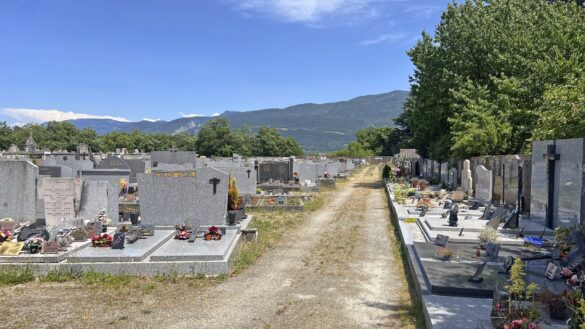
Saint-Marcellin Cemetery: “Greening” is just a polite word for no longer weeding
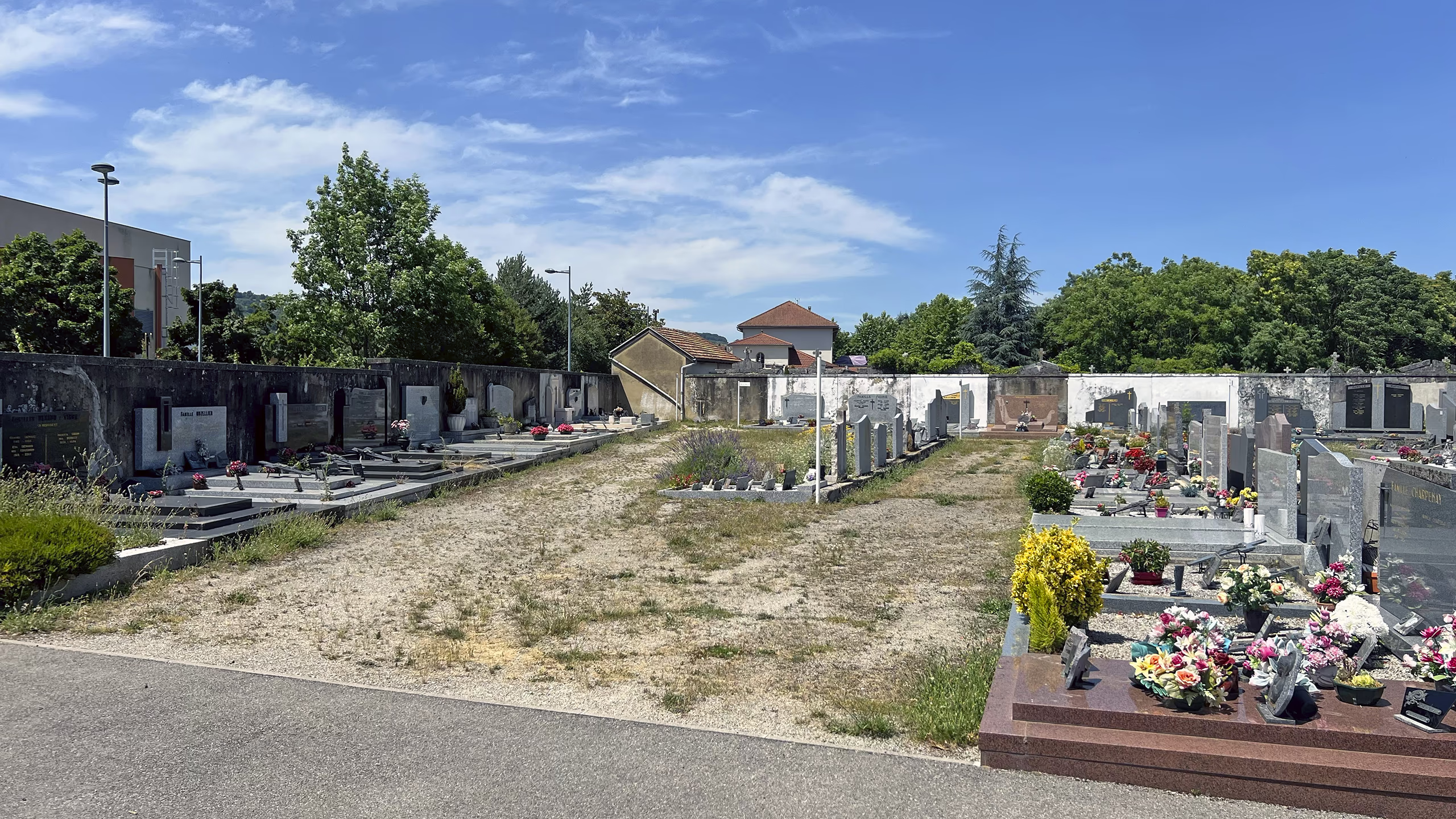
This spring, a handsome poster made the rounds in Saint-Marcellin. It celebrated the municipal cemetery as a heritage site worth visiting, complete with a guided tour and a poetic theme devoted to the passions of the departed, all under the banner of the Printemps des cimetières, France’s national weekend of funerary-heritage discovery. The intention is admirable, and a cemetery is indeed an open-air book of local history. The trouble is that while the living are invited to come admire this heritage, the families who visit during the rest of the year find overgrown paths, graves swallowed by brush, and upkeep that has gone, to borrow one resident’s phrase, completely to seed. Between the brochure and the ground there is a chasm. And to paper over that chasm, someone reached for a very green word: “greening.”
A Green Word Pasted Over a Constraint Nobody Chose
Let us start at the beginning, because there is a regulatory machinery behind all this, and it deserves to be understood rather than caricatured. Under France’s Labbé Law, passed in 2014 and applied to most public spaces since January 1, 2017, local authorities may no longer use synthetic pesticides to maintain their green spaces and roadsides. A ministerial order of January 15, 2021 extended that ban to cemeteries, taking effect on July 1, 2022. Here is the telling detail: cemeteries had deliberately been spared at first, for reasons of social acceptability, because everyone sensed that graves overrun with weeds would sit badly with grieving families. That instinct was correct.
So here is the stage. From the summer of 2022 onward, no more chemical weed killer in the cemetery. At that point a town has only three options. The first is manual or thermal weeding, serious and costly, requiring dozens of passes a year, with the workload liable to literally double in both time and budget. The second is managed grassing, which still calls for four to six mowings a year and a minimum of design. The third is the path of least resistance: let it grow, do nothing, and call it “greening” or “differentiated management.” The first two are policies. The third is abandonment, simply dressed up as virtue.
It is worth noting that Saint-Marcellin did not wait for the legal deadline to start publicizing the greening of its cemetery. As early as October 16, 2021, the regional daily Le Dauphiné Libéré ran the headline that “the Saint-Marcellin cemetery goes green,” on the occasion of repaving and path-greening work, nearly a full year before the ban came into force. The varnish, in other words, was applied before the constraint arrived. It is the perfect confession: the town saw the shift coming and chose to dress it up as a voluntary initiative rather than own it as the maintenance headache it really was.
The Twist: Real Greening Is the Opposite of a Wasteland
This is where the talking point turns against the very people who use it, and in the cruelest way. Because to “green” a cemetery, in the technical sense, does not mean letting nature reclaim its rights. It means installing a chosen plant cover, perennial ground cover, a tended lawn, all designed to occupy the soil and keep undesirable species from settling in. Greening worthy of the name is labor, not surrender.
And the most striking proof of this sleight of hand comes from a resident who, photographs in hand, reminded the town hall of an obligation that many people overlook. Decree no. 2017-645 of April 26, 2017 classifies ragweed (in French, ambroisie) among the plant species harmful to human health, and it makes destroying the plant mandatory across the entire country, for every individual and organization alike. The Isère sits at the heart of the most heavily affected region in France, and prefectural orders require the managers of public land to prevent ragweed from flowering on their property, with eradication to be carried out before the month of August, that is, before pollination. The town hall, as the cemetery’s manager, is therefore bound by a public-health obligation. The citizen who reminds it of that fact is no crank: he is legally in the right.
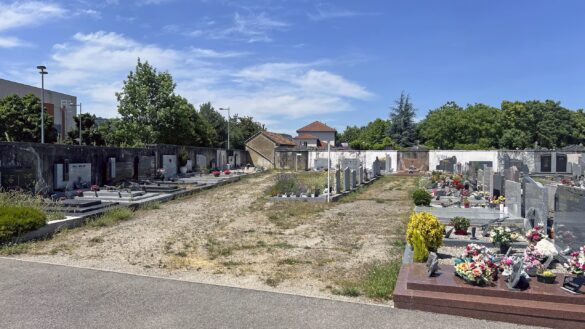
Now, what does the official plan for fighting this plant actually say? It lists “greening spaces to outcompete ragweed” among the prevention measures recommended as early as June. In other words, genuine greening, a managed plant cover, is a recognized health weapon against the most allergenic pollen there is. What the photographs of the Saint-Marcellin cemetery show is the exact opposite: an untended wasteland, which is precisely ragweed’s habitat of choice. The town is therefore not merely dressing up neglect with a pretty word. It is invoking a concept that, properly applied, would protect residents’ health, while producing on the ground the very situation that concept is meant to combat. The word says “ecology.” The soil says “breach of a legal obligation.” One could hardly dream up a sharper gap between the rhetoric and the reality.
When Public Pressure Replaces Maintenance
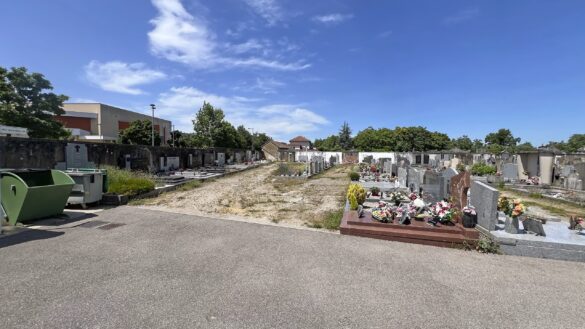
There is another lesson in this affair, and it says a great deal about the method. Local residents report that the very morning after a post denouncing the state of the cemetery, the municipal crews were suddenly on site. As if by chance, as one of them wrote. The coincidence is anything but trivial. It means that what triggers action is not regular, scheduled, budgeted maintenance, but public exposure. Let us be careful, though, not to impute cynical intent to every worker or elected official, for the problem is less a moral one than a structural one. For lack of a solid maintenance schedule and adequate staffing, it is social media that ends up serving as the emergency thermometer for technical services stretched thin. As long as no one speaks up, the brush thrives; the moment a photo circulates, a crew appears. This is maintenance policy at degree zero: no longer a public service delivered continuously, but a string of patches applied at the mercy of media flare-ups.
And here we reach the most painful point of all. A cemetery is not a traffic circle or a roadside embankment. It is a place of mourning, the last spot where people come to gather before those they have lost. To find a relative’s grave buried under brambles, to have to tear out the weeds yourself before you can lay down a single flower, is a quiet violence inflicted on people who are already grieving. The technical literature says it plainly: spontaneous vegetation in a cemetery is perceived by families as neglect. In a place of remembrance, the “green varnish” does not merely become dishonest. It becomes indecent.
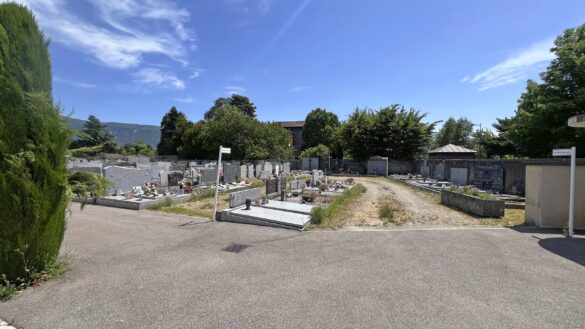
Let’s Be Fair, Which Is Exactly What Makes the Case Damning
A concession must be made here, and made openly, otherwise this column would be worthless. The pesticide-free policy is a good one. Giving up synthetic weed killers protects the quality of the water, the health of the municipal workers who once handled them in sometimes industrial quantities, and the ordinary biodiversity of our towns. This is no technocratic whim; it is a real gain for public health. Better still, well-run greening, once the initial investment is behind you, reduces maintenance over the long term and can cost less than perpetual weeding. The technical guides written for cemeteries hammer the point home: ground cover, a suitable lawn, and perennials demand an upfront outlay, but they then durably smother the undesirables. And the proof that this transition is achievable is that many towns have pulled it off. By 2024, nearly eight French municipalities out of ten had greened at least part of their funerary grounds, and a great many of them did it properly, with a result that was dignified and well kept. The case being made here, then, is not a case against ecology, nor against an obligation that cannot be met. It is a case against botched execution. Nor is it a case against one isolated town, since hundreds of French municipalities have faced the same equation since 2022, with this difference: many of them put up the resources where Saint-Marcellin put up the words.
The real charge concerns the word chosen to avoid telling the truth. And the truth is simple: the old tool was scrapped without seriously funding its replacement. The chemical weed killer, which was convenient, was withdrawn without hiring, training, and equipping for the dozens of manual passes the ground now demands. And to mask that underinvestment, a flattering vocabulary was pulled out of the hat. “Going green,” “greening,” “differentiated management”: so many formulas that turn a budget failure into an ecological commitment. It is this substitution of the word for the deed that is at issue, because it lies to the public and abandons the families.
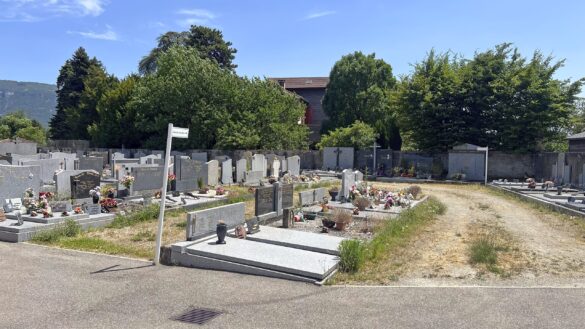
The Brochure or the Ground: You Have to Choose
That leaves one question, and only one. Can a town that prints a poster inviting people to tour its cemetery as a heritage jewel leave that same cemetery to revert to a wasteland for the rest of the year? The two messages cannot stand together. Either the cemetery deserves the care the brochure ascribes to it, in which case the town puts up the resources, mows, weeds by hand, and installs the managed cover that would honor the dead and public health alike. Or the town admits that, for lack of means, it is letting nature take over, in which case it stops boasting about the cemetery’s heritage on glossy paper.
For it must be said with gravity: a cemetery is not a plot of ground like any other; it is consecrated earth. It is where our dead and our forebears rest, those who came before us and to whom we owe our very presence here. A civilization is judged by the way it treats its dead, and the upkeep of graves is not a line item to be optimized: it is a duty of reverence, the slender and sacred thread that binds the living to those who made them. To let brambles cover the name of a grandfather, a mother, a child taken too soon is not merely to neglect a patch of soil. It is to break the communion of the generations and to forget that those who sleep there are also owed the respect of the living. To wish them rest in peace presupposes, at the very least, that we keep for them a dignified place in which to rest.
The pesticide-free policy did not mandate abandonment. It mandated a management choice, and therefore a budgetary one. Saint-Marcellin chose the word over the deed, communication over upkeep, the varnish over the work. And on the day a family has to push aside the brambles to read the name carved on a headstone, they will know that it was not ecology that abandoned them. It was a municipality that preferred to tend its image rather than its cemetery.