Ferrari Luce : Lights Out
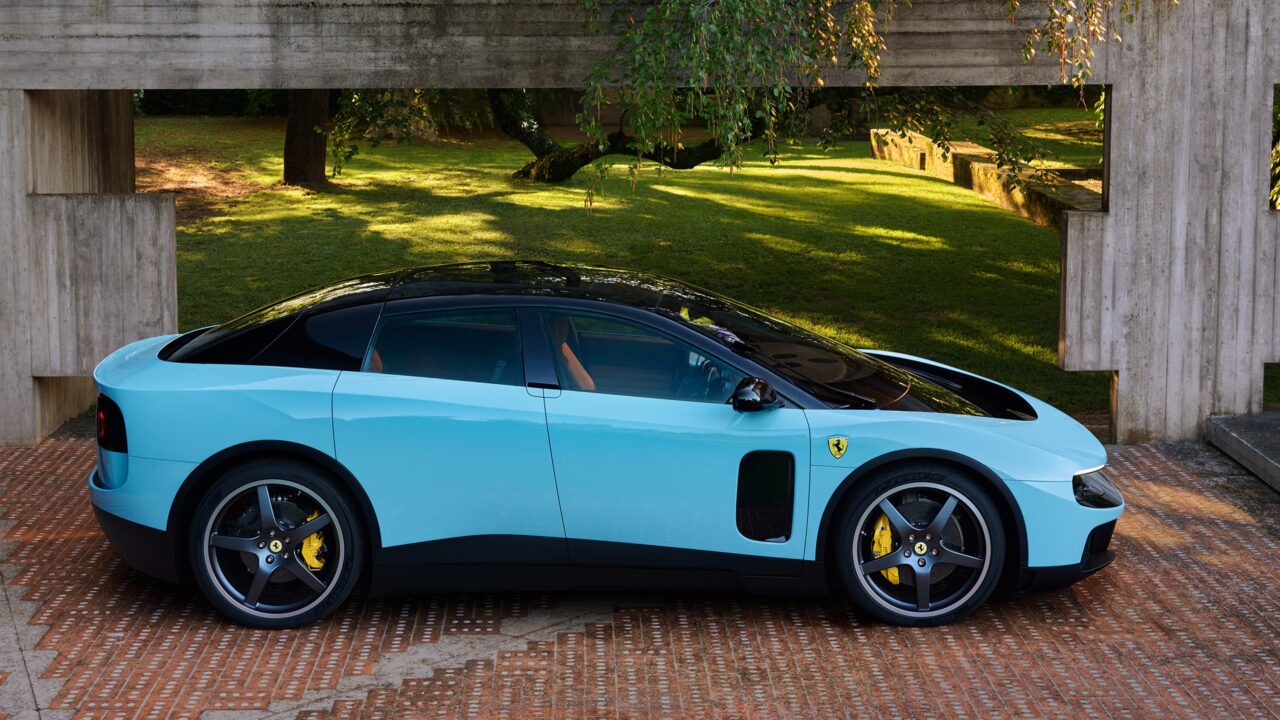
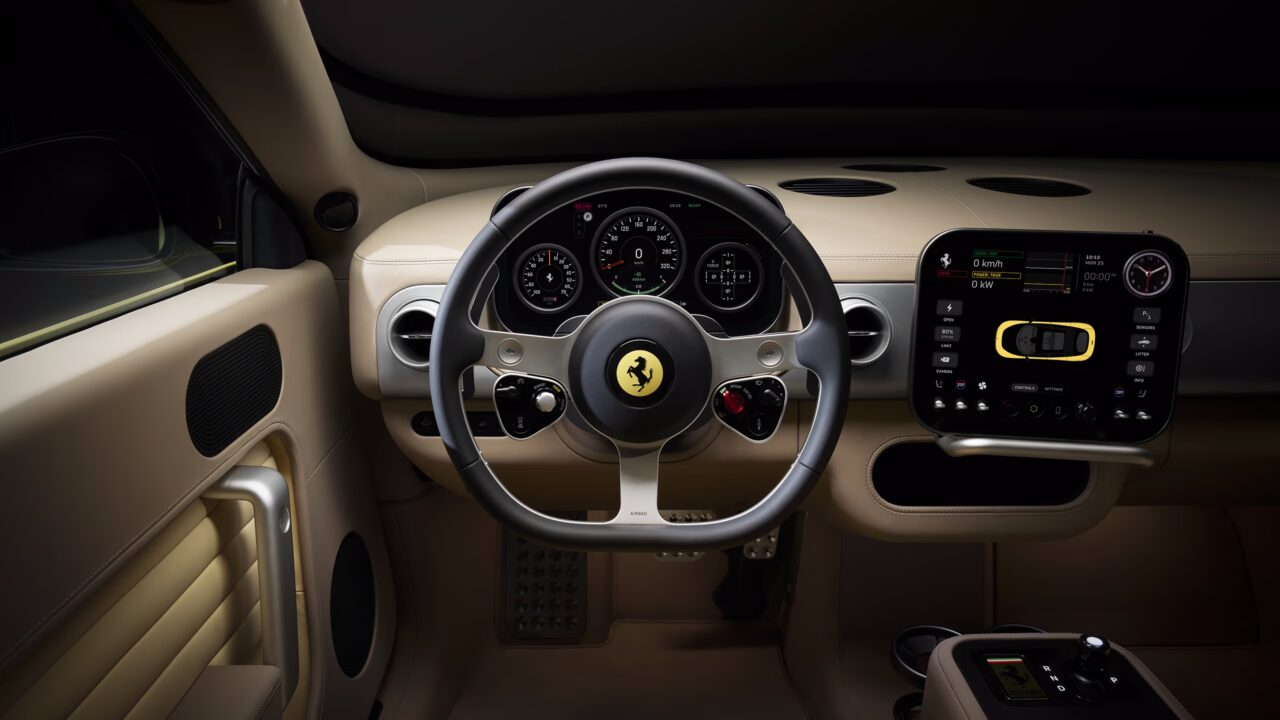
They called it Luce, Italian for light. You have to admire the nerve. Because what Ferrari unveiled in Rome on Monday evening looks less like a sunrise than the final flicker of a dying star.
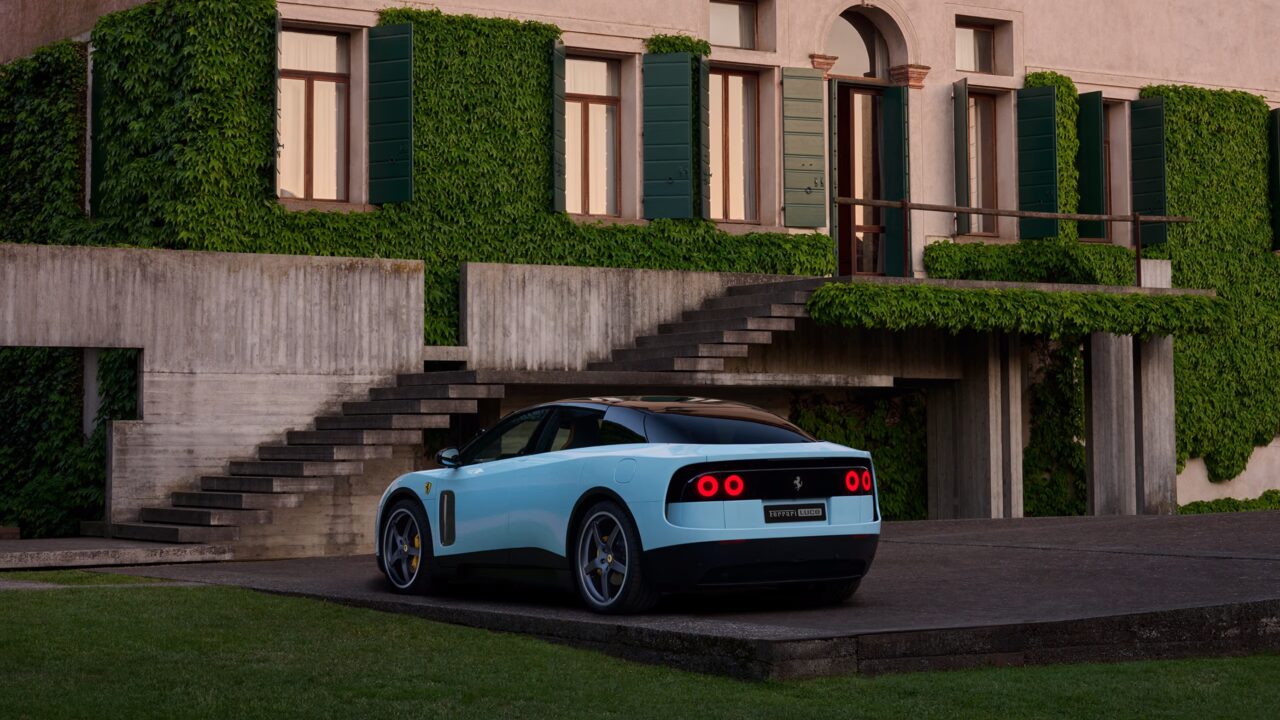
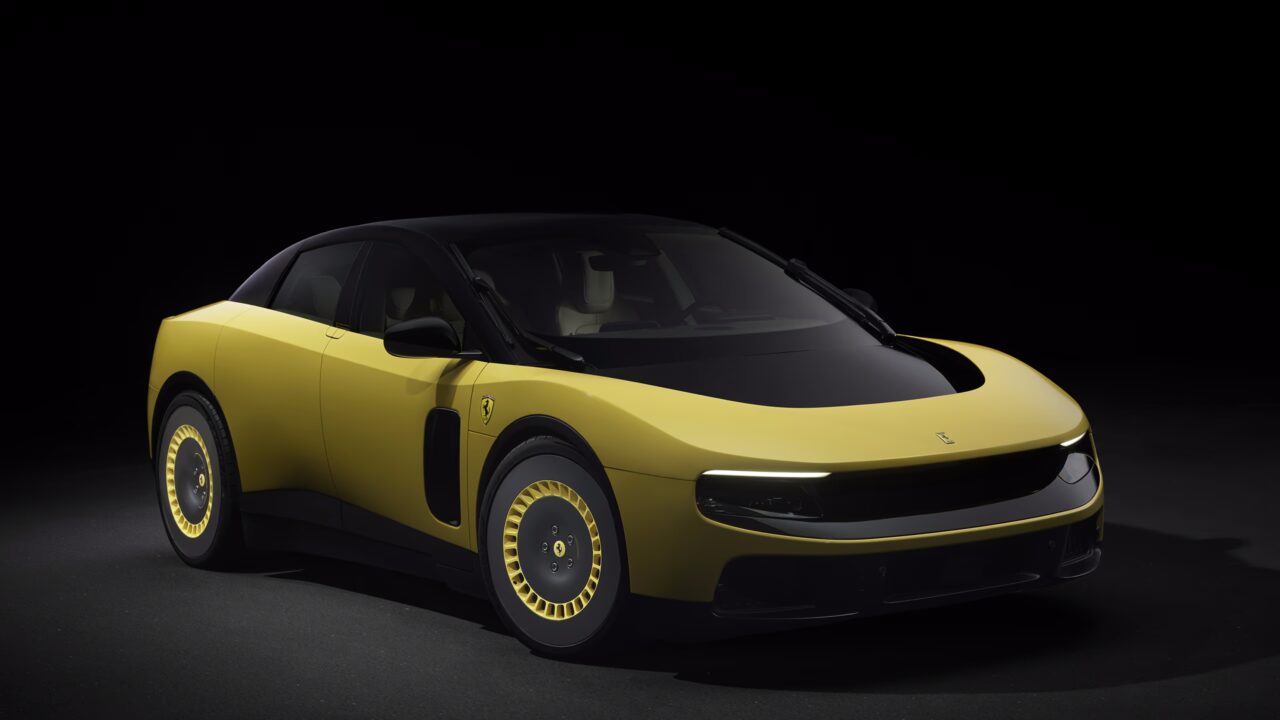
A five-seat, four-door electric sedan: 550,000 euros (more than 700,000 once “personalized”), 1,050 horsepower split across four motors, zero to sixty in two and a half seconds. On paper, the spec sheet is impressive. In person, the thing throws you. A smooth, bulging shell with not a single hard edge, perched on its wheels like a wet bar of soap. Strip the badges and no one would guess it is a Ferrari. Which is, of course, the whole problem.
Because Maranello did not entrust the design to its own studio, the one led by Flavio Manzoni. No. Ferrari went looking for LoveFrom, the California agency founded by Jony Ive, Apple’s former high priest of design, and Marc Newson. In other words: the house once shaped by Scaglietti, Vignale, Pininfarina, Bertone, and Touring, a century of Italian artistry, has handed the keys to its aesthetic over to Silicon Valley. The result is exactly what it sounds like, an iPhone on wheels: clean, smooth, disembodied, interchangeable. “Clarity” and “refined simplicity,” the press release promises. Translation: nothing that protrudes, nothing that vibrates, nothing that is still Italian.
The cruelty of the moment is that Ive, in his time, knew how to make sublime objects. I wrote here once a tribute to the Space Gray iPhone 5S, 112 grams of diamond-chamfered, anodized aluminum that marked the high point of a lineage. But the minimalism that suits a phone tucked in your palm does not transpose to an Italian grand tourer. A phone is handled. A Ferrari is driven, breathed in, heard. The grammar is not the same, and confusing the two is like applying a recipe to a sculpture.
The most cutting blow did not come from the forums. It came from within the family. Luca di Montezemolo, who ran Ferrari from 1991 to 2014, the era of nineteen world championships, did not mince his words. He fears, he says, “the destruction of a myth,” and hopes that someone will “remove the Prancing Horse from that car.” The parting shot will go down in history: this, he quipped, is a Ferrari “that even the Chinese won’t copy.” Flavio Briatore picked up the line within hours, in the same key. When former bosses and paddock veterans are reduced to wishing the badge would be unscrewed, the brand has crossed a line.
The markets, for their part, did not wait for the purists. Within hours of the reveal, Ferrari stock plunged six to eight percent, vaporizing four to five billion euros in market value. The “new customer base” Maranello is courting, tech entrepreneurs, China, the buyers of big quiet sedans, was evidently not enough to reassure the people who actually hold the stock. First lesson: you can renounce your DNA, but portfolios have long memories.
And here is what saddens me. The nineteen-sixties, and then the two-thousands, were golden ages of automotive design. Each brand spoke its own language: rear-wheel drive or all-wheel drive, flat-six, V8, V10, V12, each with its own sonic signature and a silhouette you could pick out of a thousand. You could identify a car with your eyes closed, from the timbre of its engine alone. I have tried, in The Asphalt Symphony, to set down what unfolds in that brief communion between man, machine, and road, that craftsmanship of fire that no line of code will ever reproduce. Today we live the exact opposite: brands with crushing heritage exhausting themselves to manufacture products no one is asking for, in order to fight the Chinese on the very technological ground the Chinese themselves have standardized. We have given up being different in exchange for the right to lose the same battle as everyone else. I have written before about how Dreame, a maker of robot vacuum cleaners, unveiled at CES an electric hypercar of 1,876 horsepower: that is precisely the wall Maranello has just driven into, smiling.
Because the Luce is not an isolated accident; it is the pure product of a policy. A Europe that has decreed the end of the internal combustion engine, that has elevated industrial self-flagellation into a cardinal virtue, and that watches, almost contentedly, as its crown jewels trade away a century of history to comply with a regulatory calendar. It is the same mechanism I described in writing about SCAF, IRIS², and French technological sovereignty, and more broadly about a dream of peace that has become a bureaucratic straitjacket: we know how to regulate our decline; we no longer know how to build our future. The proof of it arrived again this very morning, while I was drafting these lines. Brussels has just announced that it will reserve two-thirds of the 2 GHz satellite spectrum for European operators and confine Starlink and Kuiper to the remaining third, in order to prop up an IRIS² constellation whose first services are not expected before 2030 at best. When it comes to complying, restricting, censoring, or fencing off other people’s territory, Europe remains the gold standard. When it comes to inventing anything at all, it waits five years and issues a press release. You do not sacrifice Scaglietti and Pininfarina by accident; you immolate them on the altar of a transition no one ever asked for. The tifosi wanted a Ferrari that roars. They are being handed a luxury appliance that has to be plugged in overnight.
Which leaves the real question, the one this extinguished “light” raises in silhouette: does our civilization still have anything to offer? We invented coachbuilding, the internal combustion engine, the design line, mechanical emotion itself. And here we are, copying the antiseptic minimalism of a Cupertino startup in order to look modern, which is to say, in order to look like everyone else. Montezemolo is right about one thing: a myth is at risk of being destroyed. But that myth did not belong to Ferrari alone. It was ours. And we are watching it go out, like this Luce, without so much as the roar of one last engine.