Politics A butler at the prime minister’s residence taken into custody over a cocaine handoff. An adviser to the prime minister carried out of a party by paramedics after an overdose. A former Attal spin doctor who says he was “blowing his brains out” on coke while at the finance ministry. A France Télévisions journalist describing deliveries made within steps of government ministries. In June 2026, Sébastien Lecornu had his ministers, their staffs, his prefects and his ambassadors tested for drugs, then refused to release a single figure. Parliament, which writes the country’s narcotics laws, called the idea of testing itself “ridiculous.” This piece asserts nothing and proves nothing. It lines up three years of public facts and asks the one question they leave open: since when does an institution refuse an exam it is certain to pass?
Democracy In late August, LCI aired the Medef debate: seven chairs, seven candidates for the 2027 French presidential race, and no published selection criteria. Behind that stage sits an invisible round of voting, in which invitations, polls, airtime, and published sponsorships assemble the shortlist that voters will merely ratify in April. The seven disagree in real ways, but only within the walls: nobody there ever questions the walls themselves, from the European Union to the death penalty, birthright citizenship, or the church-state settlement of 1905. A democracy that never lets certain questions reach the ballot turns its political choices into dogmas. The test is not whether those ideas are good, but whether they can be beaten fairly or only ruled out in advance.
Democracy Bruno Le Maire sat down with Thinkerview, and the comment sections fixed on the interviewer’s crude, familiar tone: the office, apparently, commands respect. That is an Ancien Régime sentiment, because in a republic deference runs from the officeholder toward the sovereign, and what the office adds is not immunity from rudeness but an obligation to account for itself. Yet these critics are holding a good argument they never use: what was missing was not respect, it was the follow-up question. Behind the interview lies the same prosecutorial liturgy that runs on prime-time television, with the prosecutor’s allegiance reversed and the job description unchanged. And as long as accountability exists nowhere, not at the ballot box, not in Parliament, not before a judge, even the best interviews will remain substitutes for the real thing.
Politics The French Senate wants to hunt down “domestic interference,” an oxymoron that turns the critical citizen into a foreigner in his own country. Let’s take them at their word: applied honestly, their own definition points not to alternative media or anonymous accounts, but to the circulatory system connecting the machinery of the French state to McKinsey, Lazard, FTI, and General Electric. From Bruno Le Maire at Macro Advisory Partners to the McKinsey nexus under judicial investigation since 2022, the list is long, documented, and signed off at every step by the official ethics bodies. At the top, the revolving door is an asset; at the bottom, citizen speech is a risk to be mapped before 2027. Domestic interference is real: it doesn’t post, it invoices.
Politics On July 1, 2026, Sony buried the physical disc and absorbed its players’ fury without flinching, just as the Élysée has absorbed street protests for eight years. This indifference is no accident: the French still believe their elected officials owe them an accounting the way employees answer to a boss, while the system has methodically defused that balance of power, from the Matignon Accords to the pension reform, by way of the betrayed referendum of 2005. Constitutional locks, hardened policing doctrine, the discrediting of dissent, all the way to a QR code required to commemorate the storming of the Bastille: every crisis has been a training session for those in power. The sovereign customer and the citizen-employer died the same death, the death of the power to make anyone bend. What remains is to rebuild our levers, in our institutions and in our digital lives.
Surveillance and civil liberties On July 8, 2026, the French Senate published Report No. 875 on the regulation of information in the digital space: fifty-six recommendations, the very first of which proposes to “render invisible” certain users as elections approach. Behind a largely accurate economic diagnosis unfolds a complete apparatus: a disinformation observatory, a legal definition of truth, offenses without intent, ethics-based accreditation, and media promoted by algorithms configured on government instruction. No one will be forbidden to speak; some will simply be unfindable, unfunded, unrecognized. Having outsourced its censorship to Brussels, France is now bringing the political administration of visibility in-house. A recommendation-by-recommendation analysis, written by one of the parties concerned.
Justice Four years of investigation, search after search, and still no resolution: the McKinsey affair is no longer merely a suspicion of irregular financing of the Macron campaigns, it has become a revealing X-ray of how French justice works. The 2022 Senate report established the inconvenient facts: over one billion euros spent on consultants in 2021 alone, and a firm that paid zero corporate income tax in France for ten years. Against that backdrop, comparing judicial tempos is a cruel exercise: an inquiry opened the very day of the revelations for Fillon, immediate enforcement for Le Pen, eight years and a quiet closure for Mélenchon, perpetual suspension for the party in power. One clock, though, is ticking unwatched: Article 67 of the Constitution, which will make Macron an ordinary citizen before the law in June 2027. Seen from that angle, the next presidential election will also be an election about the judicial fate of the previous one.
Politics Every year in France, nearly 50 billion euros in public funding flows into the nonprofit sector. Behind the legitimate delivery of public services hides a major democratic drift: the funding of organizations whose sole activity is manufacturing rules and influencing policy. Subsidized by the very State they claim to watch, these groups use taxpayer money to wage permanent legal warfare, paralyzing projects and replacing the voters’ ballot with litigation. By losing their financial independence, these precious countervailing powers have changed in nature. Our democracy’s watchdog has become the administration’s lapdog.
Democracy Only a few years ago, a truck used to come down your street. You set the bin out the night before, and by morning it was empty. The service was delivered, paid for by the household waste collection tax, and written in black and white into the intercommunal budget. That truck is slowly fading from […]
Democracy 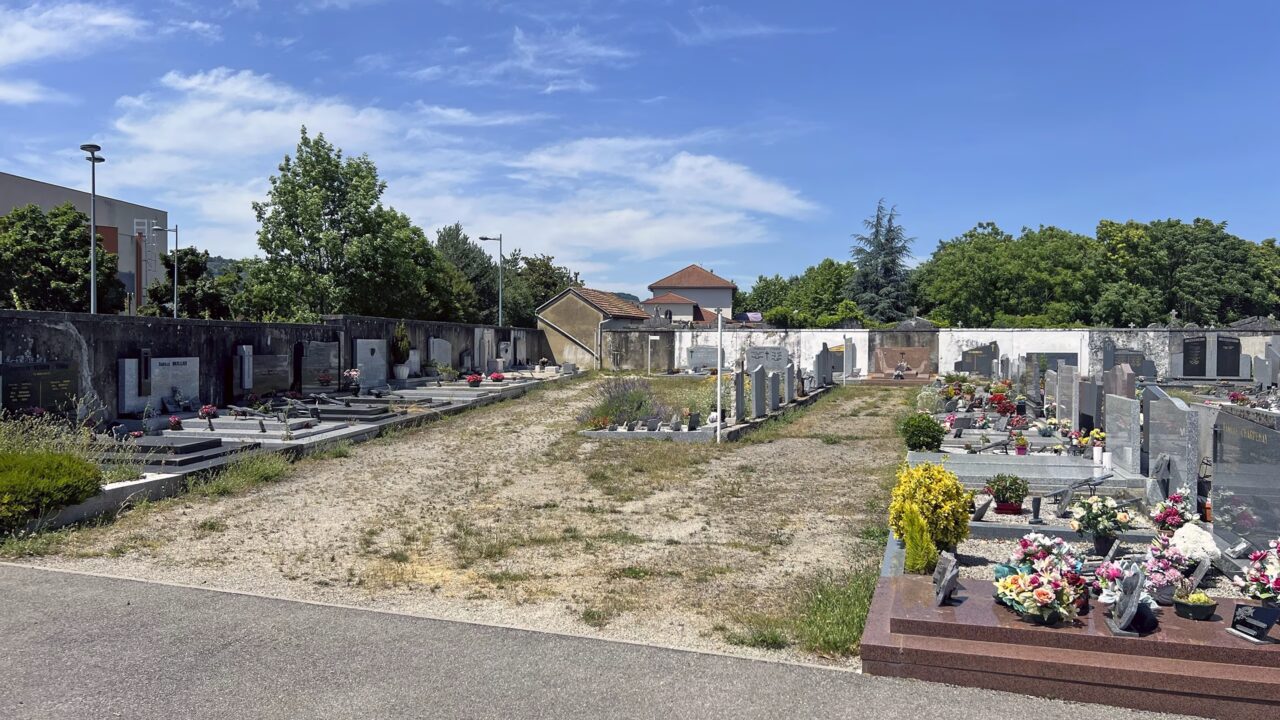
This spring, a handsome poster made the rounds in Saint-Marcellin. It celebrated the municipal cemetery as a heritage site worth visiting, complete with a guided tour and a poetic theme devoted to the passions of the departed, all under the banner of the Printemps des cimetières, France’s national weekend of funerary-heritage discovery. The intention is […]