Soccer was better in the clear
On the night of May 30, 780 people were arrested across France. Two deaths, 219 people injured (eight of them seriously), 57 police and gendarmes hurt. These are not figures to make light of.
The rest, though, invites a little irony. Arrests are up 32 percent year over year, an increase so steady you’d almost file it under seasonal data. PSG has just won the Champions League in Budapest, and France celebrates by torching bus shelters and cars. The interior minister called the unrest “absolutely unacceptable,” a line he can recycle next year without changing a comma.
We’ve nearly forgotten that last year, too, it was PSG lifting the same trophy, again with two deaths and more than 260 vehicles torched. Two finals won back to back, two nights of rioting: neither victory nor defeat changes a thing; all that matters is the pretext. Soccer is no longer the event. It has become the starting gun.
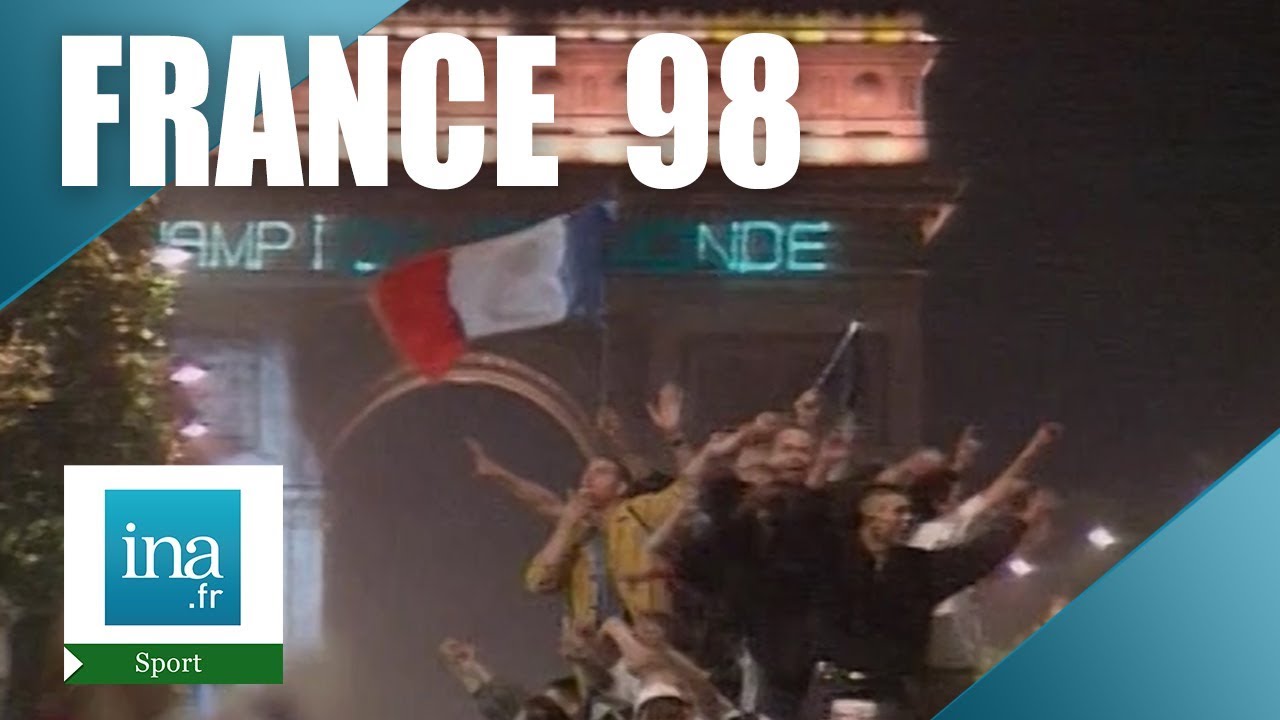
I could stop there and hold forth on crowd control, the eight thousand officers deployed for nothing, the impunity the police unions keep denouncing. Others do it better than I do, and louder. What these images really call to mind is something else: a time when soccer was not a fuse but a celebration. And the finest celebration of them all was called 1998.
The Question That Returns With Every Tournament
With every World Cup, the same question resurfaces: will this one top ’98? The answer is no, and it has been for twenty-eight years. France ’98 remains the most fully realized edition in the tournament’s history, and not just on the field. Everything was right, down to the smallest detail: the national teams’ kits, the design of the ball (the Tricolore, the first World Cup ball to dare to use color), the logo, the mascot (good old Footix, a rooster a fair bit more likable than the average French politician), and even the official song, “The Cup of Life,” which has since become the unofficial anthem of an entire sport. 2006 gave it a real run, with its packed stadiums and a final that passed into legend; but it is precisely on that accumulation of detail, and soon on being free, that ’98 keeps the edge.
Stars Everywhere, Even on the Minnows
And what a cast. Genius wasn’t confined to the favorites; even middling national sides fielded stars. Mexico had Blanco and Hernández. Chile brought Salas and Zamorano. Denmark lined up the Laudrup brothers and Schmeichel. Paraguay sent out Chilavert, the goalkeeper who scored on free kicks. Croatia unveiled Šuker, who walked away with the Golden Boot. To say nothing of the great Dutch generation (Bergkamp, Kluivert, Davids, the de Boer brothers) or the flamboyant Nigeria of Okocha and Kanu. You didn’t watch a match waiting on a single name: they were everywhere.
And Best of All: It Wasn’t Scrambled
Here is the detail that changes everything. Back then, it wasn’t scrambled. You could watch the matches anywhere: at home, at a neighbor’s, at the café, in the village square. It was the last great tournament where even the general-interest channels, TF1, France 2, broke their schedules to air it free to all, where soccer became a mandatory national conversation, with no subscriptions to stack and no flipping among three rights holders. Rich and modest, old and young alike, everyone saw the same images at the same moment. The game belonged to everyone, because it cost nothing more than switching on the television. It was, in the literal sense, a commons.
And that free access spilled into the streets. On the eve of kickoff, four giants some twenty meters tall, one for each continent, made their slow way across Paris, setting out from the Étoile, the Opéra, the Pont-Neuf and the Champ-de-Mars to converge on the Place de la Concorde before hundreds of thousands of people. You could smile at how slowly the procession crawled; still, the whole world seemed to be walking down the Parisian avenues, and the celebration was collective, good-natured, almost innocent.
Twenty-eight years later, this Champions League final played out by subscription, behind a paywall, at the end of a season parceled out among several broadcasters you have to bundle together so you don’t miss a thing. The spectacle has been privatized, and the street, for its part, has gone up in flames. On the very avenue where people once watched the giants of the world file past, bus shelters now burn. I’m not claiming the tollgate is what lights the cars; but when soccer stops being a shared, joyful release and turns into a product you unlock one unit at a time, the collective elation loses its common channel, and it tips that much faster into mere venting. Strange kind of progress: we took a sport people watched for free and together, shut it behind a tollgate, and it comes back to us as arrests by the hundred.
Scrambled on one side, burned on the other. In between, there was ’98, and a kind of soccer you could still love without paying twice.