24 Hours of Le Mans: The Myth Holds, the Welcome Crumbles
I don’t go anymore. Let me be clear: it isn’t for lack of wanting to. The 24 Hours of Le Mans remains one of the finest motorsport events I have ever had the chance to attend, and watching it roar back to life, with every major manufacturer returning to the grid, is genuinely thrilling. But after going back year after year, I have reached a conclusion I take no pleasure in stating: the racing has never been stronger, and the fan experience has never been worse.
The gap has become glaring. On one side, an event that has rediscovered its grandeur, manufacturers jostling to take part, an intensity we had not felt in years. On the other, a reception that frays season after season, as though the organizers kept selling more tickets without ever asking what the people buying them actually go through. Prices are soaring, the number of admitted spectators keeps climbing, and at the same time the access points around the circuit keep shrinking. The logic escapes me.
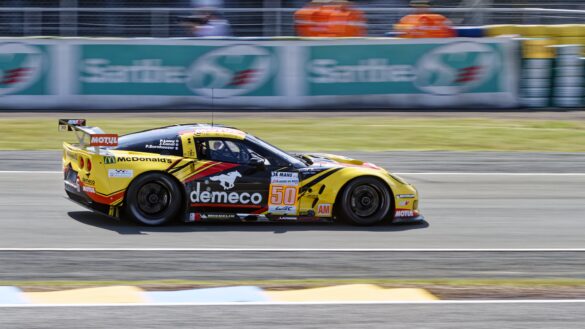
More People, Less Room
Anyone who attended the centenary remembers it. The place was suffocating. The following edition was no better: the same crush, the same sense of no longer being able to move freely. You end up packed onto the Dunlop bridge, wedged between two food trucks, hunting for an open vantage point that has all but disappeared. The paradox is cruel: you pay more and more to see less and less. And that already assumes you have made it inside, because things start falling apart well before the turnstiles, with overwhelmed train stations, parking lots and campsites that sell out within minutes on the ACO’s website, and endless traffic jams on the approaches to the circuit. The ordeal starts long before the first lap.
A growing share of the areas once open to the public has been privatized. I don’t dispute an organization’s right to monetize its hospitality; that is fair game. But when it amounts to confiscating the best vantage points to make room for reserved enclosures, you start to wonder who the event still exists for. A great gathering never really dies of money; it dies from the way it treats the people who give it life, as the French Formula 1 Grand Prix bitterly demonstrated. On one side stands the lifelong enthusiast, the one who spent his summers perched on the grass banks waiting for the prototypes to flash by, now pushed back behind the barriers. On the other, a corporate crowd for whom Le Mans is no longer a race but just another networking spot, flute of champagne in hand and VIP badge around the neck. The myth sells, while the longtime fan stands in line.
I have reached the point where I find myself preferring the test and qualifying days. Fewer people, more breathing room, the chance to enjoy the cars without fighting for three square feet of asphalt. When the appetizer becomes more pleasant than the main course, there is clearly a problem in the kitchen.
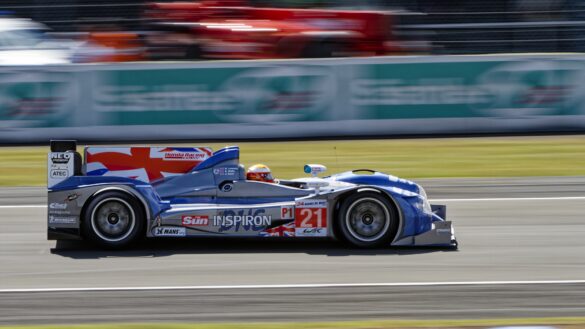
The ACO Knows How to Run a Race, Not How to Host a Crowd
This, I believe, is where the heart of the matter lies. The ACO is an automobile club. When it comes to the track, to the sporting regulations, to safety, to the sporting conduct of the event, I have no doubt: it is probably one of the best in the world, and the quality of the racing proves it every year. But staging an event of this magnitude, managing flows of hundreds of thousands of people, getting the welcome and the hospitality right, is another profession entirely. A profession in its own right, one you do not improvise simply because you know how to time a field of prototypes.
The great events figured this out long ago: you surround yourself with specialists. There are professionals in managing large public crowds, the kind you find behind major festivals or the staging of the Olympic Games, whose entire job is exactly this: to get a human tide in, moving, fed, able to see, and back out again without leaving it feeling like cattle. There is no shame in delegating what falls outside your core business. On the contrary, it would be a mark of intelligence. The ACO would do well to focus its energy on what it masters, the racing, and to entrust the rest to those who do it for a living. Otherwise, the slide in the fan experience will continue, and it has already dragged on for too many editions.
And let no one tell me it is impossible with a crowd that size. The proof to the contrary exists, just a few hundred miles to the east. The 24 Hours of the Nürburgring draws more than two hundred thousand spectators, as many as Le Mans, around a loop of more than twenty-five kilometers that links the Nordschleife to the Grand Prix circuit. And there, miraculously, you can actually move around, you find a thousand vantage points, you camp on the banks of the Eifel right up against the track, all for a fraction of the price of a Le Mans ticket. Same discipline, same colossal turnout, a radically opposite experience. The difference is not a matter of fate; it is a matter of how you choose to welcome people. On the altar of the Nordschleife, that sacred ground of endurance racing, the public still reigns.
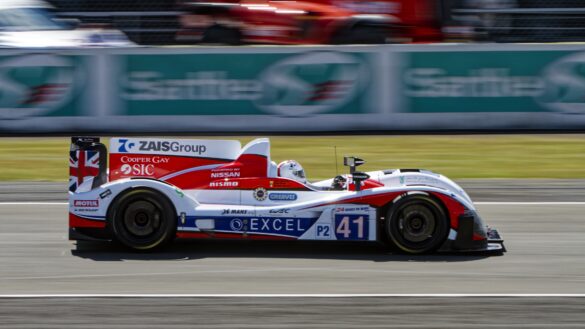
Why Spa Won Me Over
I see that same lesson play out on a smaller scale and, above all, closer to home. For some time now, I have been voting with my feet: I go to the 24 Hours of Spa. Not the sheer scale of the Ring, but the same spirit: an Ardennes layout where you can move without queuing at every step, vantage points in abundance, and prices that do not insult your wallet. There you rediscover that sense of freedom that made the great endurance weekends so special, the one Le Mans has slowly lost.
Spa does not carry the legend of Le Mans, granted. No event does. But the fan experience is so much more enjoyable that the question now comes up every spring: where do I actually want to pitch my tent? And more and more often, the answer leans toward the Ardennes.
This does not mean I am turning my back on the Sarthe for good. I will return, I already know it, because you do not shrug off a myth like that one. And that is exactly what makes the situation so frustrating: this place deserves so much better than the treatment fans put up with there. The day the ACO decides to treat its spectators with the same seriousness it gives its drivers, I will be the first to buy a ticket without a second thought. Until then, I will keep looking toward Spa.